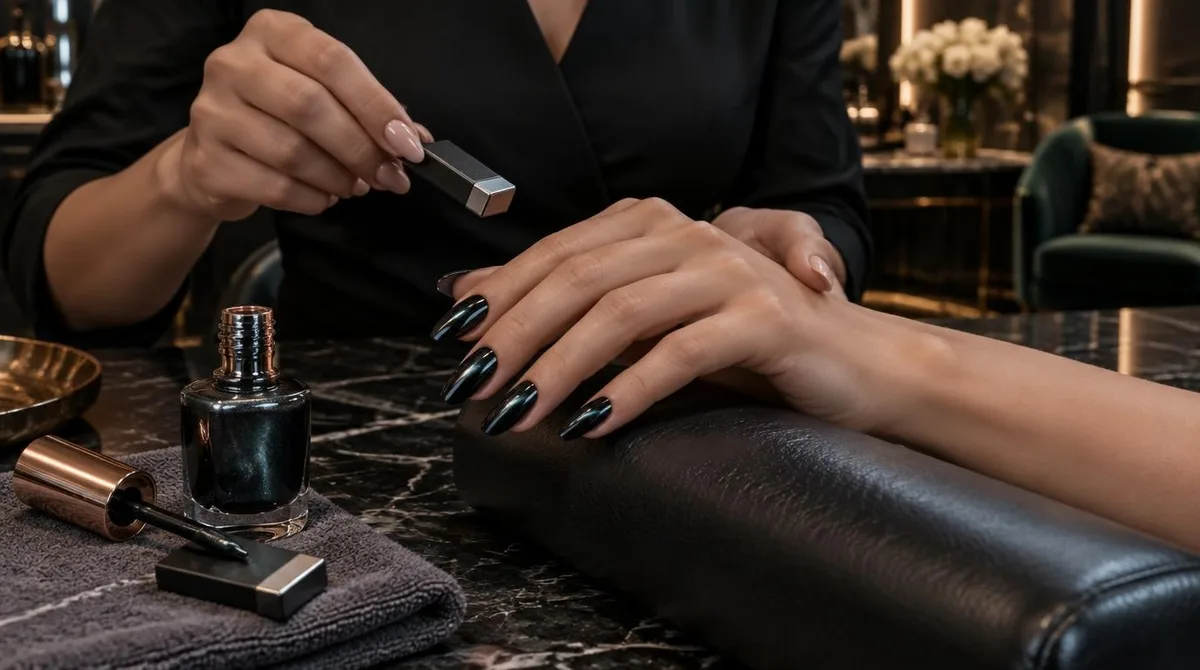
Cat eye nail designs are manicures done with magnetic polish — a gel formula loaded with tiny magnetic particles that a magnet drags into a glowing stripe or arc, the way light catches a feline eye. The look spread through nail salons and then nail-tok, where creators film the magnet reveal like a magic trick. The catch: it only works with polish that contains the particles, and only while the polish is still wet.
The name is a nod to the animal itself. Domestic cats — Felis catus, per Simple English Wikipedia — have eyes built to catch light in a way ours don't, and the polish borrows the vibe rather than the anatomy. One sharp stripe of shimmer down a dark nail, and the reference lands instantly.
Below: how the physics works, which designs and colorways are worth asking for, and what the at-home version actually demands.
How does magnetic cat eye polish work?
The polish is a gel base mixed with thousands of microscopic metal particles — usually iron-based pigments. Left alone, they sit scattered in the formula and the nail just looks shimmery. Hold a magnet over the wet polish, though, and the particles line up along the magnet's field, migrating toward one another into a concentrated band.
That band is the "cat eye": a bright, reflective streak that shifts as your hand moves, because the particles sit at a slightly different depth than the base color. Timing is everything. The magnet has to go on while the polish is fresh, hold steady for several seconds, and stay far enough away not to touch the surface. Too late, and the gel has started curing — the particles freeze where they are. Too close, and you dent the nail.
Most kits pair the polish with a flat magnet or a wand with multiple settings, which is how you get different shapes from the same bottle. The polish then cures under a UV or LED lamp like any gel manicure, locking the pattern in place. For related coverage, see The French Manicure Is Nearly 50 And Still Booking.
Which cat eye designs are people asking for?
The classic is the vertical center stripe: one luminous line down the middle of each nail, usually over black, deep navy, or emerald. It reads sleek with almost no effort, which is why it keeps resurfacing every season.
From there, the magnet angle does the design work:
- The arc. Turn the magnet sideways and the stripe curves toward one edge — a crescent that flatters almond and coffin shapes.
- The diagonal. Angle the magnet 45 degrees for a slash of light across the nail. Slightly more editorial, still wearable to an office.
- The velvet core. A round magnet held centered pulls particles into a soft oval glow, the "velvet" or "velour" finish that dominated the trend's recent wave. It reads plush rather than stripey.
- The French tip. Hold the magnet near the free edge and the shimmer collects at the tip — a cat eye doing an impression of a French manicure.
Colorways run the full wheel, but the trend's home turf is deep and moody: black with green shimmer, burgundy with red, midnight blue with silver. Softer pastels exist and look genuinely pretty, but the effect is most dramatic when the base is dark. One bottle can also layer over an existing gel color, which is how nail techs stretch one shade into a dozen looks.
Can you do cat eye nails at home?
Yes — with the honest caveat that this is gel, and gel has rules. You'll need the magnetic polish itself, its matching magnet, a base coat, a top coat, and a UV or LED lamp. The process, in order:
- Prep the nail as you would for any gel manicure: clean, lightly buffed, dehydrated.
- Apply base coat and cure it.
- Apply one coat of the magnetic polish. Don't cure it yet.
- Hold the magnet over the wet polish — a few millimeters above the nail, not touching — for the time the brand specifies, usually several seconds. This is the step where the design happens.
- Cure, then repeat with a second coat if you want a stronger effect, magnet and all.
- Seal with top coat and cure again.
The two mistakes beginners make are curing too soon and wobbling the magnet. Both blur the line. Prop your hand flat on a table, magnet in the other hand, and brace your magnet-side wrist. Steady beats fast. If gel systems feel like more commitment than you want — the lamp, the careful removal, the curing discipline — this is a look that salons do quickly and well, and the at-home kit will still be there later.
Salon or DIY: what's the real difference?
In a salon, the magnet work is the easy part — the tech has done thousands of reveals and can angle the field freehand. What you're paying for beyond that is the prep and the removal. Gel soaks off with acetone and patience; picked or peeled gel takes layers of your nail with it, which is the actual risk in this trend, not the magnet.
At home, the math is friendlier than most nail art. One polish plus one magnet produces a whole family of designs, so the kit earns its shelf space in a way a five-brush stamping setup never does. It also travels well: the effect is forgiving of a slightly wobbly line, because the shimmer reads as texture from a normal conversational distance anyway.
Our analysis: this is one of the few viral nail techniques where the at-home version genuinely delivers what the video promised — as long as you respect the cure windows. The magnet is doing the hard part for you.
Why the cat eye keeps coming back
Trends in nails tend to cycle the way everything else does, but this one has a structural advantage: it's a technique, not a motif. A lightning bolt decal dates itself. A shifting band of light doesn't, because it's tied to how the polish is made, not to a season's mood board. The effect also photographs absurdly well — the shimmer moves in video in a way flat polish can't — which keeps feeding it back into the feed that made it famous.
It slots neatly into the wider mani economy, where a single finish can carry an entire booking: as we covered in the nail art economy, the techniques that endure are the ones that give nail techs a signature to sell without a full set of hand-painted art. The cat eye is exactly that — a premium-looking result with a repeatable method behind it. It's the same reason the French manicure is still booking decades in: a clear visual idea, endlessly re-angled. This connects to our earlier piece, The Nail Art Economy: Inside The Mani Culture.
What the evidence supports is modest and useful: the effect comes from magnetic particles in the formula, the magnet decides the shape, and dark bases show it best. What remains genuinely unknown is which colorway breaks next — the mechanics don't care, and neither does the feed.