Nail shape is the cheapest style decision you'll make all year, and one of the few that changes how your hands read from across a table. The short version: longer, tapered shapes like almond and oval make fingers look longer; square and squoval read more architectural and suit wider nail beds; coffin and stiletto are the drama shapes, and they cost you strength. The right answer is less about rules and more about what your hands and your life will actually put up with.
It's worth saying up front that shape is style, not health. According to Healthline, most nail problems — brittleness, peeling, ridges — trace to diet, moisture, or plain old trauma rather than anything serious, which means the shape you file is one of the few nail variables that's purely yours to play with. Play with it, then. Here's the field guide.
Nails are accessories the same way belts are, and the same logic applies: proportion first, trend second. We've said the same about why silhouettes matter more than color, and it holds here — the outline of a nail does more work than the polish on it.
What does each nail shape actually look like?
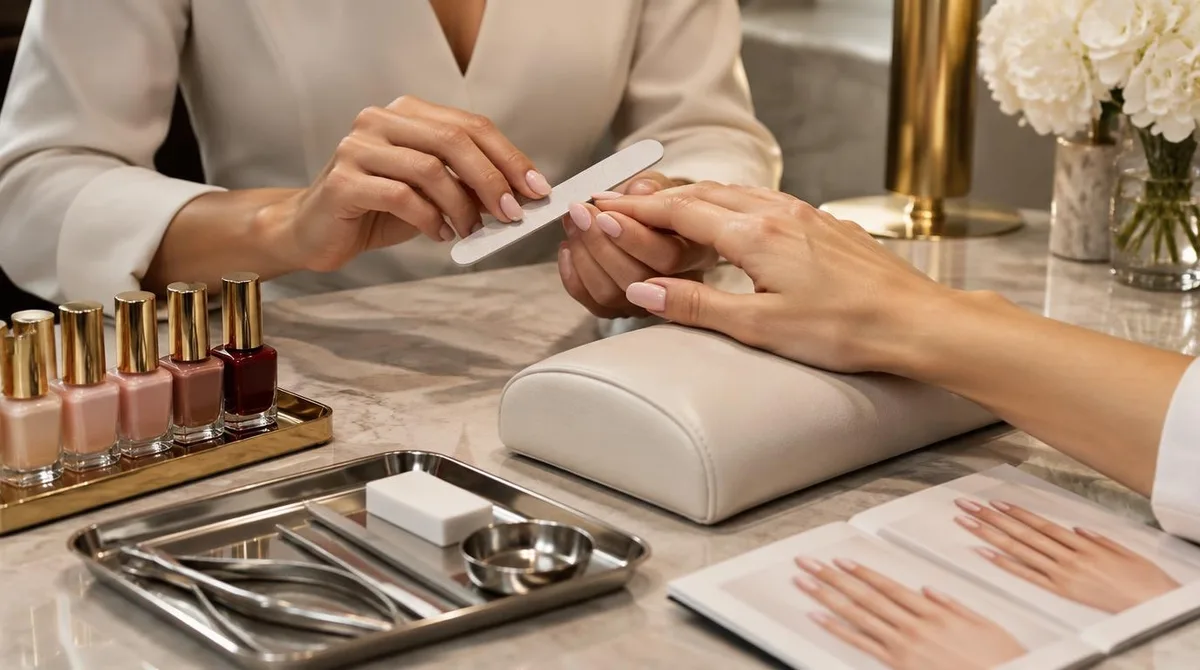
Quick tour, in plain terms. Round follows the natural curve of your fingertip. Oval is that, stretched — sides filed in, a soft point. Almond goes further: a slim taper to a rounded point, the shape of an almond in its shell. Square is straight sides with a flat, hard top edge. Squoval softens that edge into a curve — square's sensible sibling. Coffin (the internet calls it ballerina) tapers to a flat tip, like a tiny coffin or a pointe shoe. Stiletto tapers to an actual point. Lipstick is the odd one: filed diagonally, slanted like the bullet it's named after.
Most salons will do any of these on request. The differences come down to two variables: how much the sides get filed in, and what happens at the tip.
Which shapes make fingers look longer?
If lengthening is the goal, the tapered shapes win. Oval and almond pull the eye along the finger rather than across it, which is why they've been the default of classic manicures for decades. They suit narrower nail beds especially well, and they're forgiving on shorter fingers.
Square and squoval do the opposite — they widen. On broad nail beds that reads deliberate and graphic, a bit French-manicure-meets-architecture. On narrow beds it can make fingers look shorter. Squoval is the safer entry point: it keeps the clean edge but rounds off the severity, and it's the shape most likely to survive everyday typing without a snag.
One honest caveat: these are styling conventions, not laws. Hands are varied, and a shape that flatters one person's proportions will fight another's. The mirror beats any chart.
Which shapes are the most durable?
Here's the trade nobody puts on the mood board: the pointier the nail, the weaker it is. Filing the sides down removes the nail's strongest structure, so stiletto and long coffin sets snap first — and long means long, since these shapes need real length to read as anything but sharp triangles. Square corners are their own weak point; the 90-degree edges catch and chip.
Round, oval, and squoval are the workhorses. They follow the nail's natural strength lines, resist snagging, and grow out without looking wrecked. If your hands do actual labor — dishes, keyboards, a toddler — the durable trio is where you'll be happiest. Gloves help too: Healthline notes that repeated wetting and drying is a leading cause of brittle nails, and recommends lotions with lanolin or alpha hydroxy acids for the damage.
How do you pick a shape for your nail bed and lifestyle?
Practical steps, in order:
- Look at your nail bed. Wide beds carry square and squoval well. Narrow beds pair with oval and almond. Match the shape's width to the bed's width at the tip, not the base.
- Measure your patience. Coffin and stiletto demand regular maintenance fills and gentle handling. If you can't commit, squoval will not betray you.
- Consider your length. Short nails do best round, squoval, or short square. Tapered shapes need length to exist at all.
- Match the vibe. Square reads minimal and graphic. Almond reads soft and classic. Coffin reads maximal, the shape of press-on sets and red carpets. There's no wrong answer, only a wrong occasion.
And a note on the canvas itself: shape won't fix a struggling nail. Healthline points out that peeling usually comes from external trauma — using your nail as a tool, or aggressive polish removal — while vertical ridges are a normal feature of aging nails that a gentle buff can smooth. If your nails are peeling or splitting, a shorter, rounded, natural set is the kindest thing you can do while they recover. The beauty shelf can wait.
Are coffin nails still in, or is it squoval's moment?
The trend cycle rotates through shapes the way it rotates through denim cuts. Coffin had its long, loud run; almond has been the quiet constant behind most of the minimalist nail eras; square had its 90s revival and never fully left. The honest read is that shapes don't retire so much as take turns — the same pattern we traced in what lasts versus what trends. Choose the shape that suits your hands and let the cycle catch up to you.
What this means, in sum: start with squoval if you're unsure, go almond if you want elegance, go square if you want edge, and earn your stilettos. Nails are the one accessory you wear every single day — file accordingly. This connects to our earlier piece, How To Wear Ankle Boots With Every Trouser Shape.