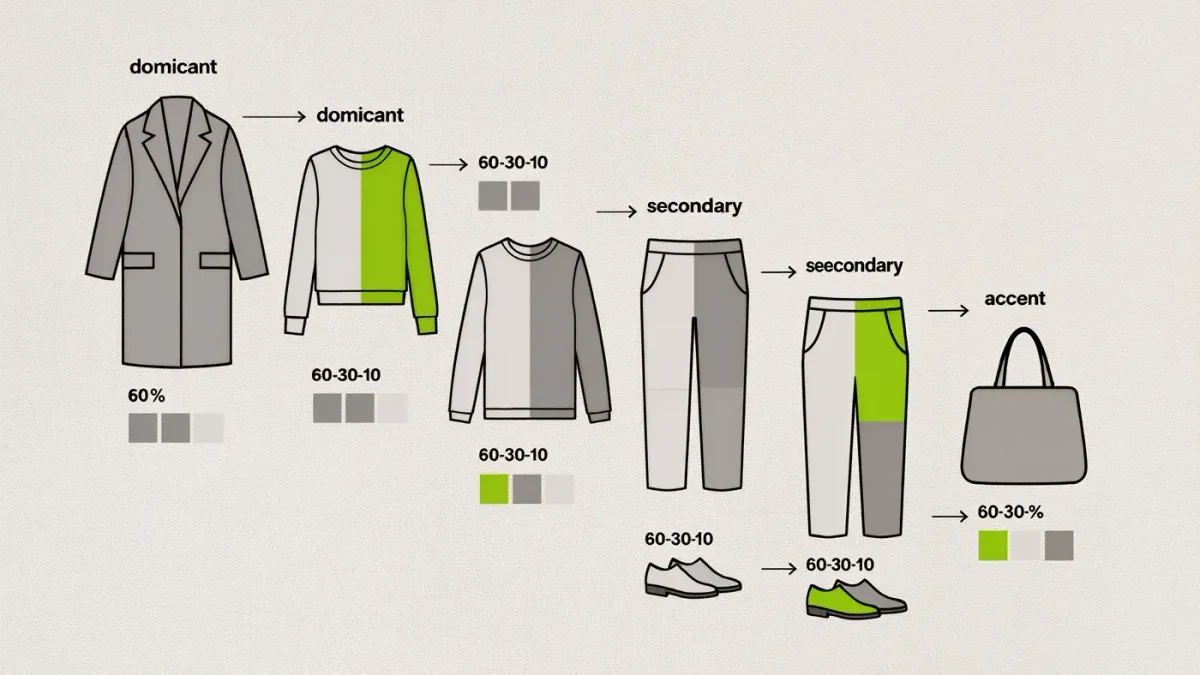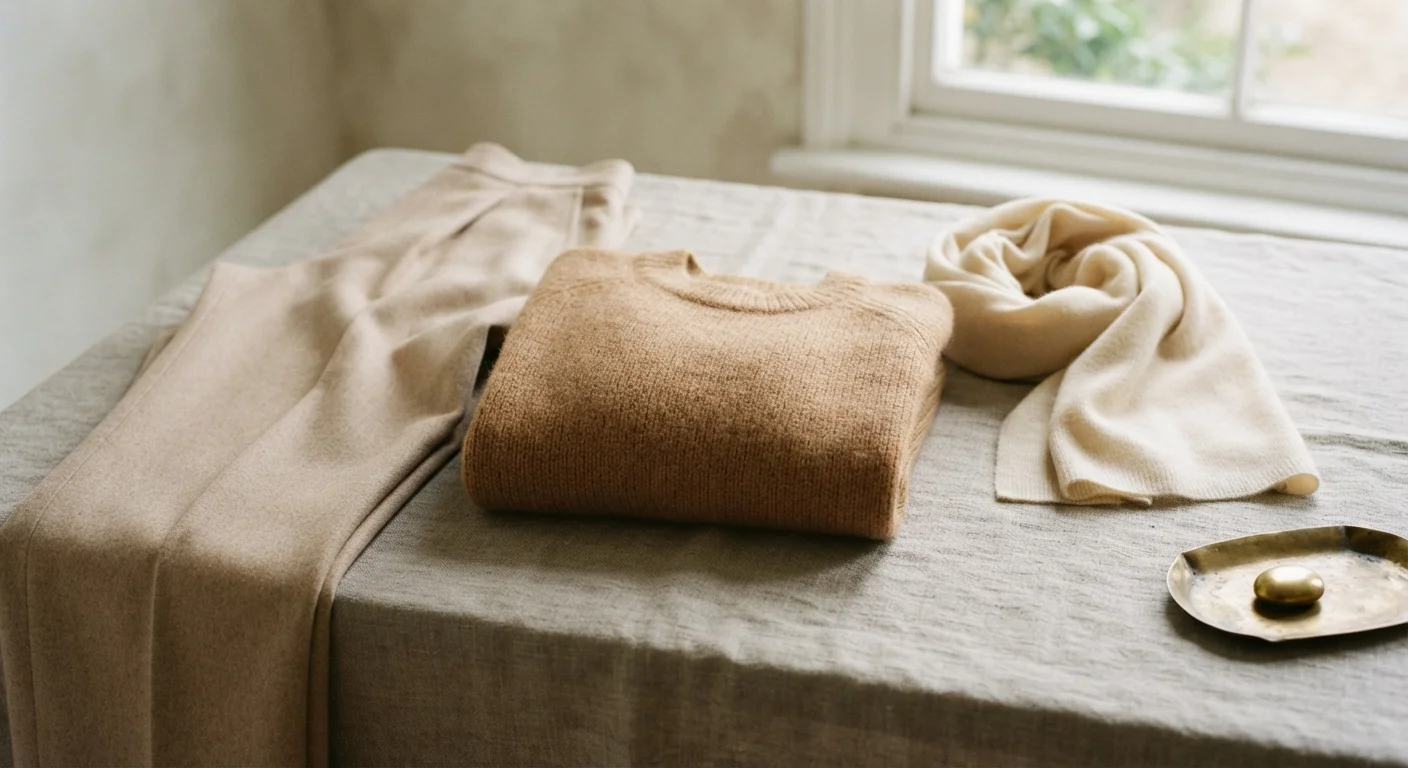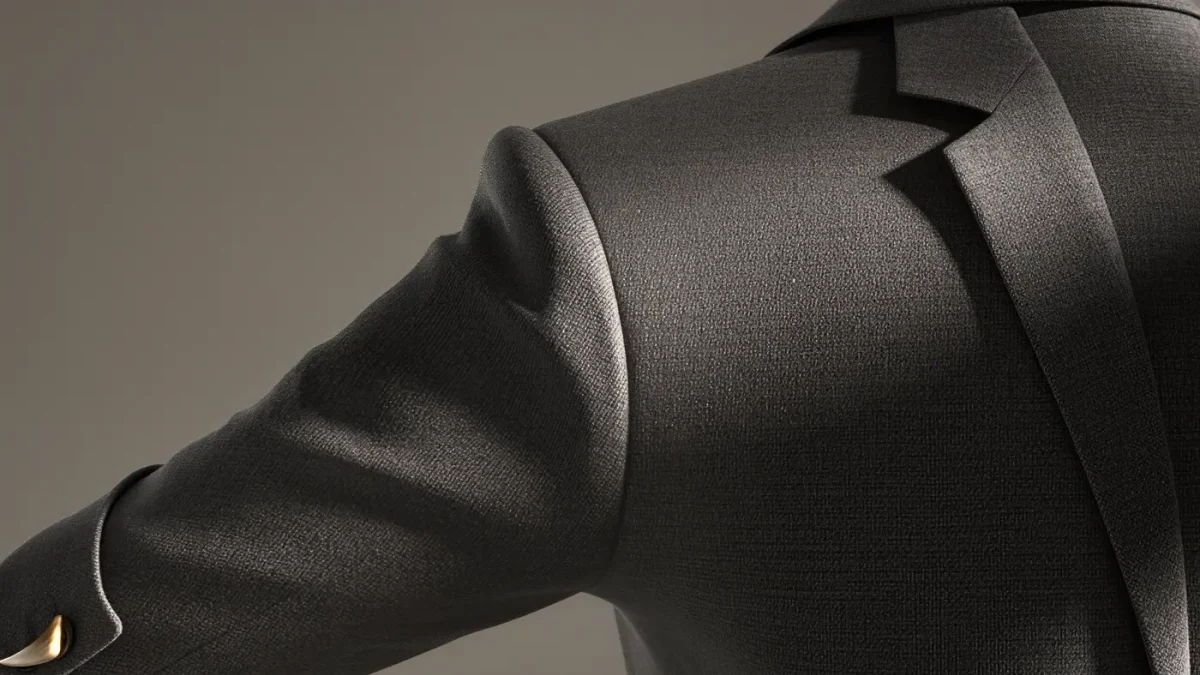
Silhouette beats color because it's the first thing the eye registers: before your brain processes that a coat is green, it has already read whether that coat is a long column, a cocoon, or a box with sleeves. Stylists use a version of the squint test for exactly this reason — blur the outfit and what survives is proportion, not pigment. Color can be swapped season to season; the shape is the argument. Two people can wear the identical charcoal palette and one looks accidental while the other looks like a magazine, purely because one of them understands where their clothes end and begin.
This is also why a 'wrong' color in a perfect cut can look deliberate, and a perfect color in a sloppy cut never does.
What is a silhouette in fashion, exactly?
The silhouette is the outer contour of the dressed body — the two-dimensional shadow the outfit casts. Fashion history is basically a timeline of these shadows: the cinched hourglass of the 1950s, the slim column of the 1960s, the oversized shoulder of the 1980s, the boxy cropped top over wide trouser that has defined much of the 2020s. Designers sketch in silhouette before colorways exist, because the shape is the idea and the color is the decoration.
Practically, silhouette is decided by four volumes: shoulder, waist, hem, and how much air the garment lets between fabric and body. Change one and the whole outfit rewrites itself.
Why does shape read before color?
Because human vision processes contrast and contour before it processes hue. It's the same reason a black-and-white photograph of a stranger is instantly legible while a blurry color photo isn't — edges carry the information. In an outfit, the edge is the silhouette: the sharp shoulder line, the taper at the ankle, the volume balloon of a sleeve. Color arrives second, as mood. Movement arrives third. This ordering is also why flowy, undefined shapes photograph worse than structured ones even in expensive fabric; without an edge, there's nothing for the eye to hold.
How do you use proportion instead of obsessing over color?
Play volumes against each other. The working rule for a century has been one volume at a time: oversized top with a lean bottom, or a fitted top over a wide leg. Volume everywhere reads like a duvet; fitted everywhere reads like an internship. A third variant — the crop point — does the same work vertically: a jacket ending at the narrowest rib, a trouser breaking at the ankle bone, a hem that decides where the leg starts.
The waist is a lever, not a law. Defining it creates an hourglass read; hiding it creates a column read; both are valid silhouettes, and both fall apart when they're accidental. The difference between intentional and sloppy is usually one decision: did you choose where the shape changes.
Can you build a wardrobe around silhouette?
Yes, and it's more stable than building one around color. Identify the two or three shapes that consistently make you feel correct — say, long column, cropped boxy jacket over wide trouser, waist-defined dress — and treat them as your templates. Then color becomes the variable you can play with freely, because the structure underneath is already solved. This is the actual mechanic behind people who 'always look put together': they're not repeating colors, they're repeating shapes with different paint.
It also fixes shopping. Instead of asking 'do I like this color,' you ask 'is this one of my shapes' — a much harder question to answer incorrectly at 9 p.m. on a phone screen.
Does this mean color doesn't matter at all?
It matters — as the second read and the emotional register. Color decides whether the same silhouette feels serious, soft, or loud, and it decides what's flattering against your face, which is a real and legitimate concern. But color errors are cheap to make and cheap to fix; a shape error is structural. That's the hierarchy: color sets the tone of the sentence, silhouette decides whether the sentence parses.
Consider the cultural proof: outfits go viral for shape far more often than for shade. The oversized blazer moment, the barrel-leg jean takeover, the return of the peplum — all silhouette stories. Nobody has ever declared a season of 'greige' and changed how a single body looks.
What's the fastest silhouette upgrade?
Tailoring at three points: shoulder, hem, taper. A $30 hem adjustment that moves a trouser break from puddle to ankle changes the whole limb line; a taken-in side seam creates the waist decision; a sleeve shortened to hit the wrist bone sharpens the arm. You don't need new clothes — you need the same clothes to end in the right places. Shape is decided at the endings.
FAQ
What is the squint test for outfits? Blur your eyes or view the outfit in a mirror from across the room: what remains legible is the silhouette and value contrast, not the exact hues. If the blurred version looks balanced and intentional, the outfit works at a distance — which is where most people see you first.
Should I follow 'flattering for my body type' rules? Treat them as suggestions with a long history, not physics. Nearly every rule exists to create one of two reads — waist definition or an elongated column. If you like a different read, break the rule on purpose; an intentional shape beats a compliant one every time.
Which matters more for photos: silhouette or color? Silhouette, decisively. Cameras flatten depth, which erases volume nuance and makes strong outlines — defined shoulder, tapered hem, visible waist decision — carry the entire image. Loud colors without structure read as noise in photos; strong shapes read even in grayscale.