A capsule makeup kit is a small, deliberate set of products that work together and work on almost any occasion. The idea borrows from capsule wardrobes: fewer pieces, chosen so each one does more than one job. A beginner, as Vocabulary.com puts it, is someone brand new at something — still learning, still finding their footing — and that is exactly the right starting point for a kit built on twelve products rather than forty.
The case for going small is simple. When every product pulls double duty, you spend less, you waste less, and you actually learn what each thing does on your face. A drawer of impulse buys teaches you nothing. A drawer of twelve considered pieces teaches you everything. This connects to our earlier piece, Chemical vs physical sunscreen: what the difference actually changes.
This is our analysis of what earns a slot, and what doesn't. The count matters less than the rule underneath it: nothing gets in unless it can do at least two jobs.
What does a capsule makeup kit actually mean?
It means a fixed, small set of products you reach for daily, chosen so they layer well together and suit more than one setting. Think of it like a style uniform: the same silhouette, remixed. Your kit should carry you from a Tuesday desk to a Saturday dinner with one or two swaps, not a full re-do.
Two things separate a capsule kit from a random small collection. First, cohesion — a cream blush and a cream bronzer should sit in the same tonal family, or the face reads patchy. Second, multi-use — each product needs a second job, or it's just a souvenir.
The twelve products, in order
Here's the working list. Order matters, because it's also the order you'd apply most of it.
- Sunscreen. The non-negotiable first layer, and the one product here with a health job as well as a beauty one. If the physical-versus-chemical question confuses you, our chemical vs physical sunscreen explainer breaks down what the difference actually changes.
- Skin tint. Lighter than foundation, more even than nothing. It covers the basics and lets skin look like skin — which is the whole brief.
- Concealer. One shade, used on under-eyes and blemishes. It also doubles as a subtle brightener when tapped along the centre of the face.
- Cream blush. Cheeks, obviously — but the same stick works as a lip stain when patted thin. One product, two placements, done.
- Cream bronzer. Warms the perimeter of the face and doubles as a soft contour. Choose a shade that reads like a long weekend in the sun, not a mudslide.
- Brow gel. Brows frame everything, and a tinted gel both shapes and fills. It's the fastest single upgrade in the kit.
- Mascara. One tube, one job, done well. Black-brown if you want softness; full black if you want the punctuation mark.
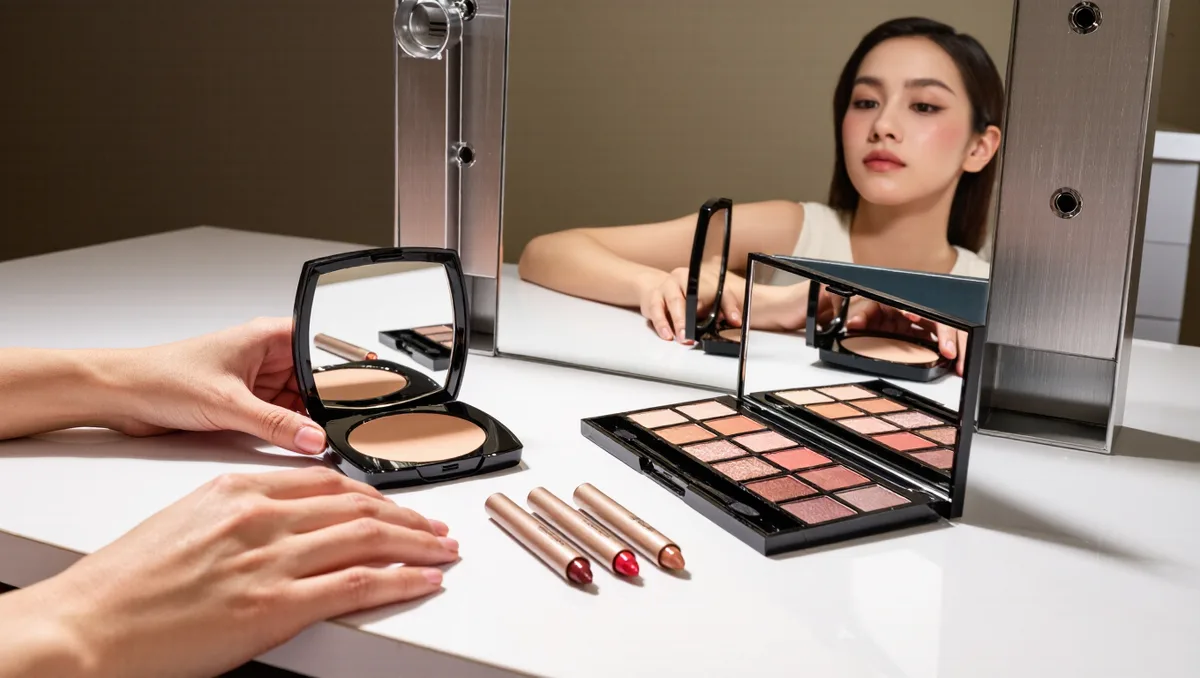
- Neutral eyeshadow quad. Four shades — a light base, a mid tone, a deeper crease shade, and a soft highlight. The mid tone doubles as liner when applied with a damp brush.
- Lip liner. A neutral close to your own lip tone. It defines, it extends wear, and it can fill in entirely when you're in a hurry.
- Lip oil or tinted balm. The quiet finisher. It works over liner, over bare lips, or blotted over lipstick to soften a shade you bought too bold.
- Setting powder. A small translucent one, used only where you actually shine — usually the T-zone. It also lightens a too-heavy concealer when pressed on top.
- A good brush set, small. Four or five brushes: one for powder, one for blush and bronzer, one for shadow, one for blending, one for detail. Tools are half the result; keeping them clean is the other half, and our guide to how to clean makeup brushes properly, and how often covers the schedule.
How do you choose shades when everything is new?
Match to what's already on your face, not to a number on a chart. Test tint and concealer on the jaw in daylight. Pick blush and lip in the same tonal family — if your lips flush pink, stay pink; if they lean berry, lean berry. Bronzer should be one to two tones warmer than your skin, never orange.
When in doubt, buy the smaller size. Capsule logic applies to packaging too: minis let you test a shade through a whole season before committing to a full pan. The same thinking reshaped fragrance, where perfume minis took over your bag for exactly this reason — try small, upgrade only what earns it.
What this means for your routine
A twelve-product kit turns makeup from a puzzle into a sequence. Morning becomes five minutes: sunscreen, tint, concealer where needed, brow gel, mascara, lip. Evening out becomes three additions: bronzer, the quad, liner. Same products, more intention. Nothing new to learn under pressure.
It also changes how you shop. Every future purchase has to justify itself against twelve incumbents. If a new blush can't replace or clearly outperform the one you own, it stays on the shelf — and the drawer stays clean. That discipline is the whole aesthetic, and it's why the capsule approach keeps resurfacing in beauty conversation every few seasons.
Where a beginner kit goes from here
Start with the twelve. Wear them for a month. The products you reach for without thinking have earned their slot; the ones gathering dust are telling you something about your actual routine, not the aspirational one. Swap accordingly, slowly, and only when something wears out.
The evidence for going small is mostly lived and practical rather than statistical — fewer products mean fewer reactions to manage, less expiry waste, and a shorter learning curve. What remains unknown is your own preference, and that's the fun part. A capsule kit isn't the end of experimenting. It's the stable base camp you experiment from.