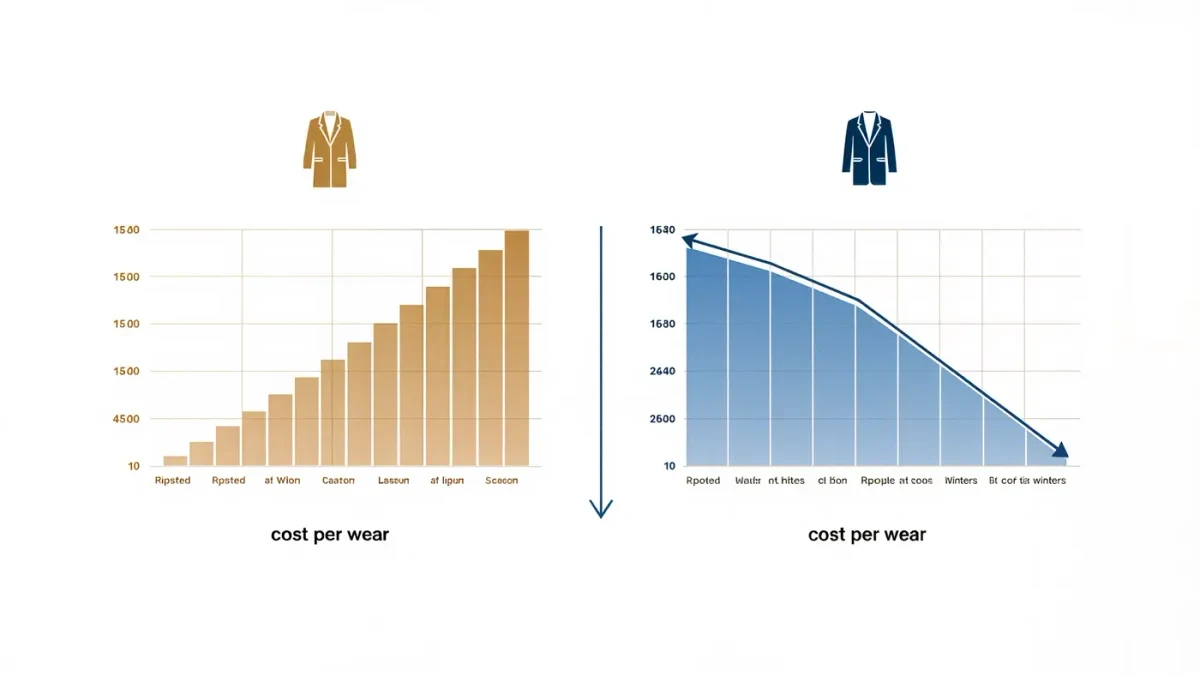
Buying a coat once comes down to four checks, in this order: a silhouette that fits over your thickest layer, a natural-fiber shell, construction you can see — set-in sleeves, functioning cuffs, a lined body with finished seams — and a silhouette you'll still want on your body in five winters. Price comes last, weirdly. A $600 coat worn 120 days a year for six years costs less per wear than the $150 one you replace every other season and quietly resent by March. The coat is the highest-frequency garment in a cold-climate wardrobe. Treat it like infrastructure, not like an outfit.
Why do coats fail before the fabric does?
Because people buy them for one season's trend and one season's fit. The failure pattern is predictable: purchased over a thin sweater, worn over a chunky knit, and suddenly the shoulders are choking and the button stance is pulling. Fit a coat over whatever you actually wear in the deepest week of winter — the hoodie, the fisherman knit, the blazer — or it's a piece of outerwear with a limited service life disguised as an investment.
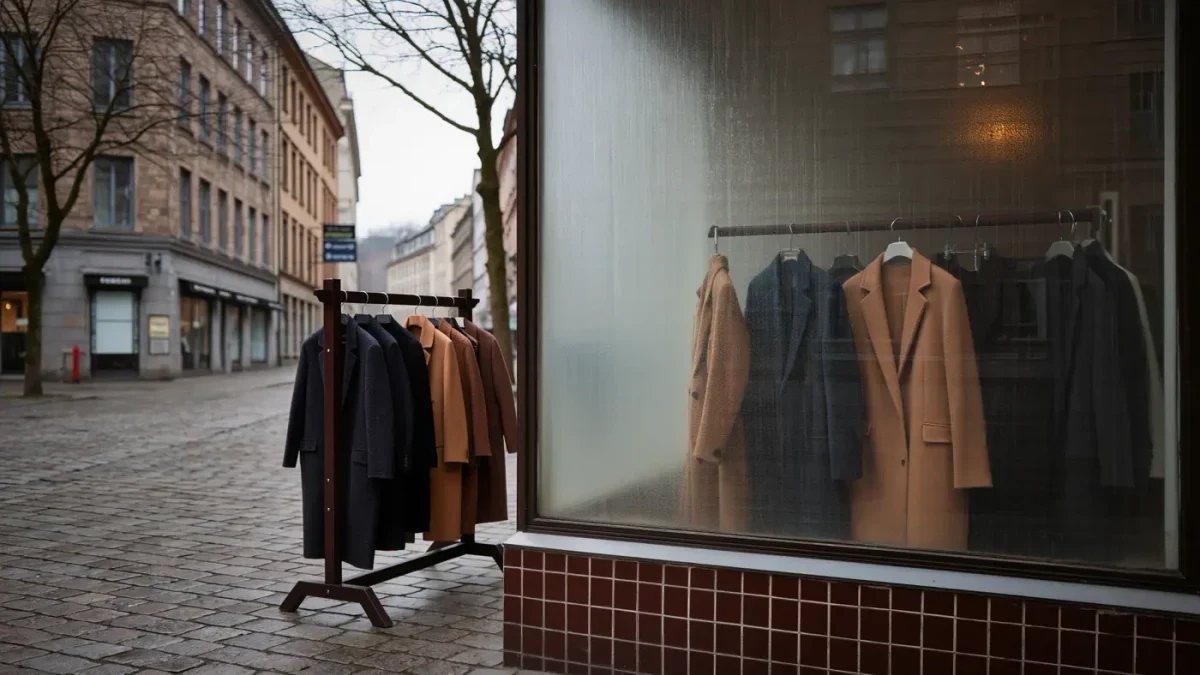
The second failure is aesthetic half-life. A coat in an aggressively of-the-moment cut looks expired the moment the moment passes. The classic silhouettes — the single-breasted overcoat, the chore coat, the balmacaan, the trench — survived because their proportions are boring in the good way. They frame outfits instead of competing with them.
What fabric should a buy-once coat be made of?
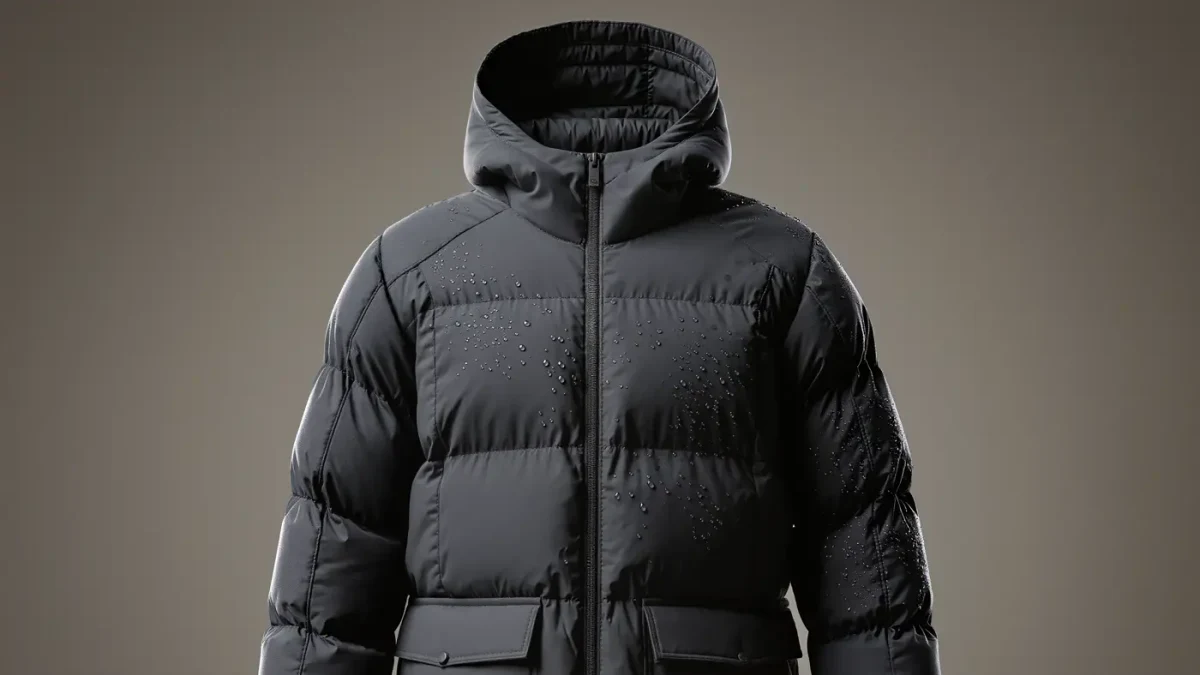
Wool, ideally with as little synthetic blend as your budget and scratch tolerance allow. Wool is naturally water-repellent, insulates when damp, and drapes in a way polyester filling physically cannot imitate. A dense wool melton or a tightly woven flannel will outlive several cycles of padded nylon. Cashmere feels like a dream and pills like a gossip column; it's a luxury, not a durability upgrade. For rain-first climates, a waxed cotton or a treated technical shell beats everything, and it doesn't pretend otherwise.
Check the care label before you commit, not after the first spill. In the U.S., care labeling has been required on most clothing since 1972 under the FTC's Care Labeling Rule — if a beautiful coat demands dry cleaning after every snowfall, that's a real cost written in small print. The label is the most honest sentence in the whole garment.
Which construction details tell you a coat will last?
Look inside first. A fully lined body protects the shell and slides over layers; unfinished interior seams with loose threads everywhere are the tell of a garment assembled to survive one return window. Then outside: set-in sleeves hang better and wear longer than cheap raglan shortcuts on tailored shapes, buttons should be sewn with a shank and backed with a reinforcing button underneath, and pockets should be bagged, not just stitched flat. Cuffs that can let out a hem, and a hem with actual allowance, mean a tailor can keep the coat alive later.
Weight is a quiet signal, too. Dense fabric resists wind and holds a line on the body. A coat that feels like tissue in the store will feel like regret on a February platform.
How much should a good coat cost?
Enough to be uncomfortable, not enough to be irrational. The honest range for a wool coat that lasts a decade runs roughly $300 to $900 new, with great things available far below that secondhand — a wool overcoat barely wears out, which is exactly why the vintage market is deep. Above the range you're paying for label, marketing, and margin more than for additional winters.
Run the math your own way: divide price by realistic wears. A coat in a cold climate gets worn almost daily for four to five months a year, which is why cost-per-wear arguments were basically invented for outerwear. No other purchase wins the calculation this hard.
Which coat color works for a decade?
The one that matches 80 percent of what you already own. Camel, charcoal, navy, and black are the boring answers for a reason — they coordinate with nearly every palette and hide city grime to varying degrees. If your wardrobe is warm-toned, camel disappears into it; if you live in black, a charcoal coat will do more work than a black one, which tends to visually flatten against everything.
Statement outerwear is allowed, but know the deal: a red coat is a personality you have to maintain. Buy it second time, not first.
When is the best time to buy a coat?
Counterintuitively, at the end of the season, when winter stock gets marked down to move — late February and March in most Northern Hemisphere markets. The downside is sizing roulette, which is why the smarter play is knowing your exact model and fit by January, then ambushing the discount. The second-best window is secondhand, year-round, because good wool coats don't age the way knitwear does and the supply never dries up.
Buy the coat when you've confirmed the fit, the fabric, and the construction — the calendar is just the discount schedule.
FAQ
Is a more expensive coat always better quality? No. Above roughly the $900 mark you're largely funding brand and retail margin, not extra durability. Fabric content, lining, and construction details — set-in sleeves, shanked buttons, finished seams — predict longevity far better than the price tag does.
How long should a good coat last? A well-made wool coat worn one season a year can easily run ten to twenty years with occasional cleaning and minor tailoring. The fabric usually outlives the buttons — which is the point, because buttons are a five-dollar fix and fabric is not.
Can a tailor fix a coat that's too small? Only at the margins. Letting out seams is rarely possible — there's usually no extra fabric — while taking in, shortening, and sleeve adjustments are routine. Never buy a coat that's tight in the shoulders on the promise of future alterations.