Office siren is a TikTok-born microtrend — late 2023 into 2024 — that recasts corporate dressing as desire: tight pencil skirts, sheer blouses, ties, cat-eye glasses, martini-glass heels, all borrowed from the mid-90s to early-2000s office and worn with a wink. The look leans on Tom Ford's Gucci era and mid-90s Miu Miu for its references, and it arrived with a built-in contradiction the internet immediately began fighting about: it is called "office" siren, but almost nobody wears it to an actual office. That gap — between the fantasy and the fluorescent-lit reality — is the whole story of the trend, and of the workwear codes it dredged back up.
What does office siren actually look like?
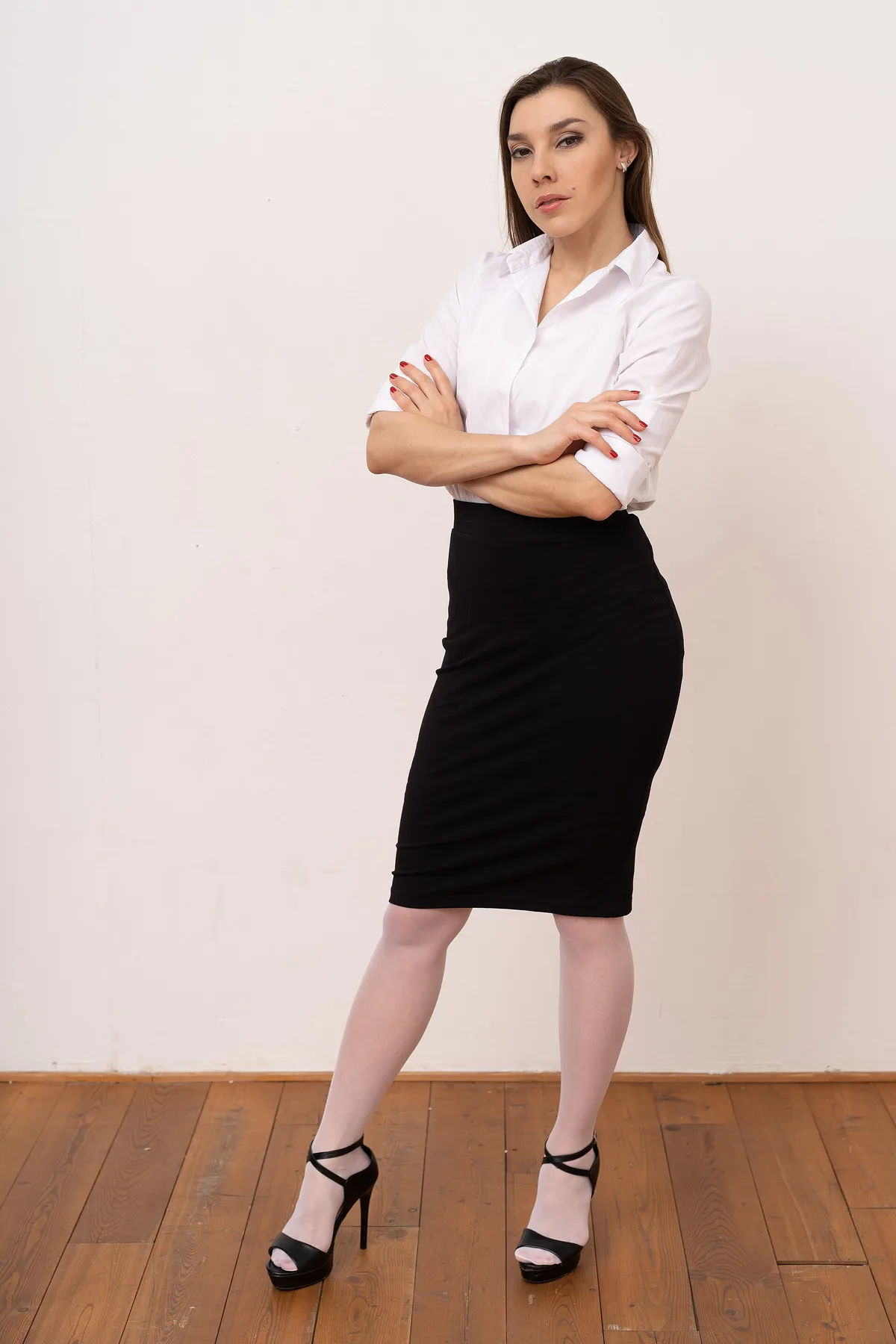
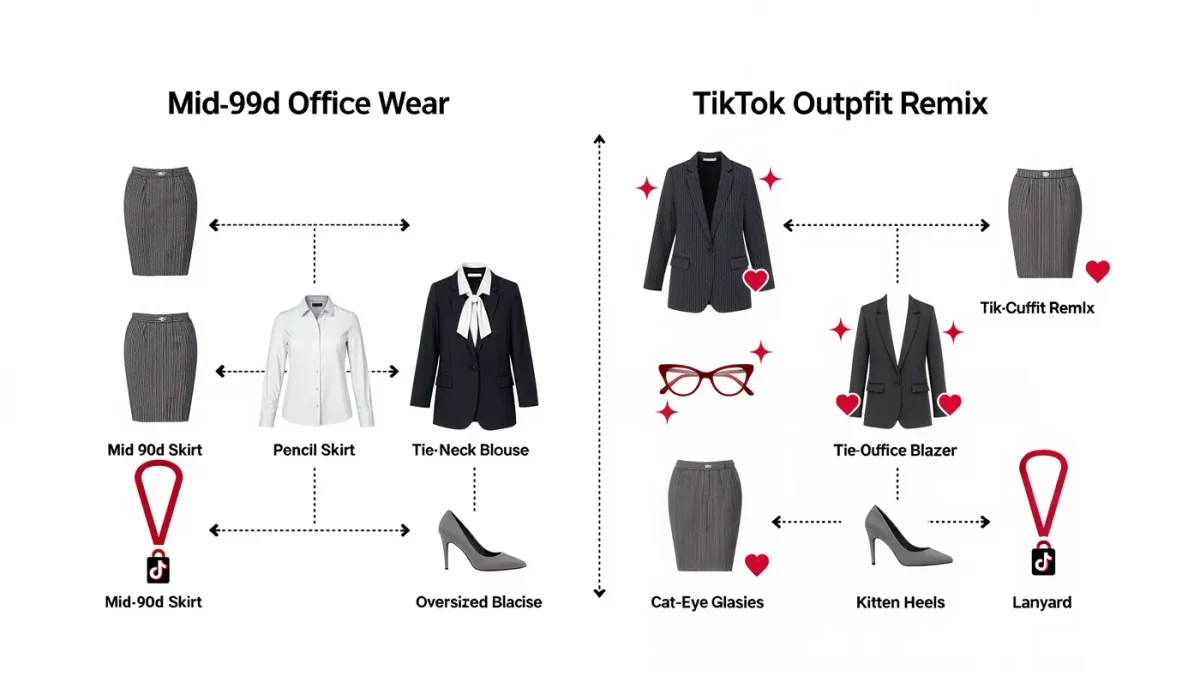
The uniform assembles from the tail end of the last century: a fitted button-down, often unbuttoned past the point of HR compliance; a low-slung or skin-tight pencil skirt; an oversized blazer slouched over everything; thin rectangular glasses; a tie or lanyard treated as jewelry; kitten heels or pointed stilettos. The palette is corporate — grey, black, pinstripe, oxford white — which is what makes the styling read as transgression rather than just outfit.
The reference points are specific. Late-90s Gucci under Tom Ford supplied the sleek,provocative corporate sexuality; mid-90s Miu Miu supplied the geeky-secretary irony; The Devil Wears Prada and basic-instinct-era cinema supplied the cumulative memory. Office siren is what happens when a generation that never worked in a 1996 office reconstructs one from runway archives and VHS frames.
Where did the office siren trend come from?
The trend surfaced on TikTok in late 2023 and accelerated through early 2024, tagged and catalogued by the aesthetics ecosystem that names everything now. Coverage through 2024 traced the look to its designer ancestors — press write-ups pointed at Tom Ford's Gucci and mid-90s Miu Miu as the primary sources — while creators like 22-year-old French TikToker Asia Bieuville became associated with the viral versions of the aesthetic.
Its timing had logic. Office siren followed close on mob wife, another 2024 aesthetic about overt sexuality and status, and both pushed against the same target: the clean-girl minimalism that had ruled feeds since the early 2020s. When modest beige has won for years, the pendulum swings hard. And a generation entering actual offices — many for the first time after remote schooling and remote work — found dress codes newly worth mocking, and newly worth playing with.
Is anyone wearing this to work?
Mostly no, and the trend knows it. The office siren outfits that go viral are photographed in apartments, fitting rooms and staged spaces; workplace realists translate the look into a pencil skirt with a closed collar, glasses and a slick bun, keeping the silhouette and losing the provocation. Even sympathetic coverage noted the gap — style desks spent 2024 asking, with genuine curiosity, whether anyone was actually pulling this off at a real desk.
But the fantasy is doing real work anyway. After half a decade of loungewear, the idea of getting dressed for work as an act of glamour — rather than compliance — is itself the trend. Office siren is less a dress code than a protest against the death of the work outfit, staged in the language of the last era that took one seriously.
Why nineties workwear specifically?
Because the 1990s was the last decade with a strict, legible office uniform — and the last one before casual Friday dissolved it. Power dressing had softened from the 1980s suit into the sleek minimalism of the mid-90s: the slip under the blazer, the mule, the tiny glasses. That uniform is close enough to be recognizable and far enough to be costume, which is the exact distance nostalgia needs.
There is also the productive discomfort. The 90s office look was built within, and often against, a sexist workplace culture — the era's dress codes policed women's bodies with a specificity the internet now documents in amazement. Replaying those codes as voluntary performance lets Gen Z hold both readings at once: the look is a joke about the archive and a reclamation of it, sometimes in the same carousel post.
The backlash, and the third reading
The criticism arrived on schedule. Commentators argued the aesthetic packages the male-gaze office fantasy — the siren is, after all, named for her effect on other people — and that reviving it romanticizes workplace dynamics women spent decades pushing out of actual offices. Defenders read it the opposite way: the same outfit, chosen and styled by the wearer, converts a costume once assigned into a costume now selected, which changes its meaning entirely.
The most useful reading holds both: office siren is not a return of the dress code but a museum visit to it. Worn to an actual job, it is a problem. Worn on a feed, it is a commentary — on how recently work told women what to wear, and how much fun can be extracted from the archive now that nobody has to obey it. The trend will expire. The argument about workwear codes, which it reopened, will not.
How to wear the trend in real life
Take the structure, edit the signal. One provocative element per outfit — the glasses, the pencil skirt, the unbuttoned collar — against otherwise serious tailoring, is how the look survives contact with an actual workplace. Kitten heels read 90s without the costume risk of sky stilettos; a tie over a fitted shirt gives the reference in a single gesture.
Fit is the entire technique: office siren lives in the tension between skin-tight and oversized, so the blazer should be a size too big precisely because the skirt is a size too small. If one of those two is missing, the look collapses into ordinary workwear. The math only works as a pair.
FAQ
What is the office siren aesthetic?
A TikTok microtrend from late 2023 through 2024 that stylizes late-90s and early-2000s corporate dress — pencil skirts, blouses, ties, glasses, heels — into a deliberately provocative fantasy of office glamour, drawing on Tom Ford's Gucci and mid-90s Miu Miu.
Is office siren appropriate for a real office?
The literal runway-grade version generally is not, which is part of the joke. The wearable translation — structured skirt, closed collar, glasses, slick bun — keeps the silhouette and the attitude while staying inside most dress codes.
Why is it controversial?
Critics see a male-gaze office fantasy that romanticizes sexist-era dress codes; defenders see voluntary reclamation of an archive women once had no choice about. The argument is the point: it reopens the question of who workwear codes serve.