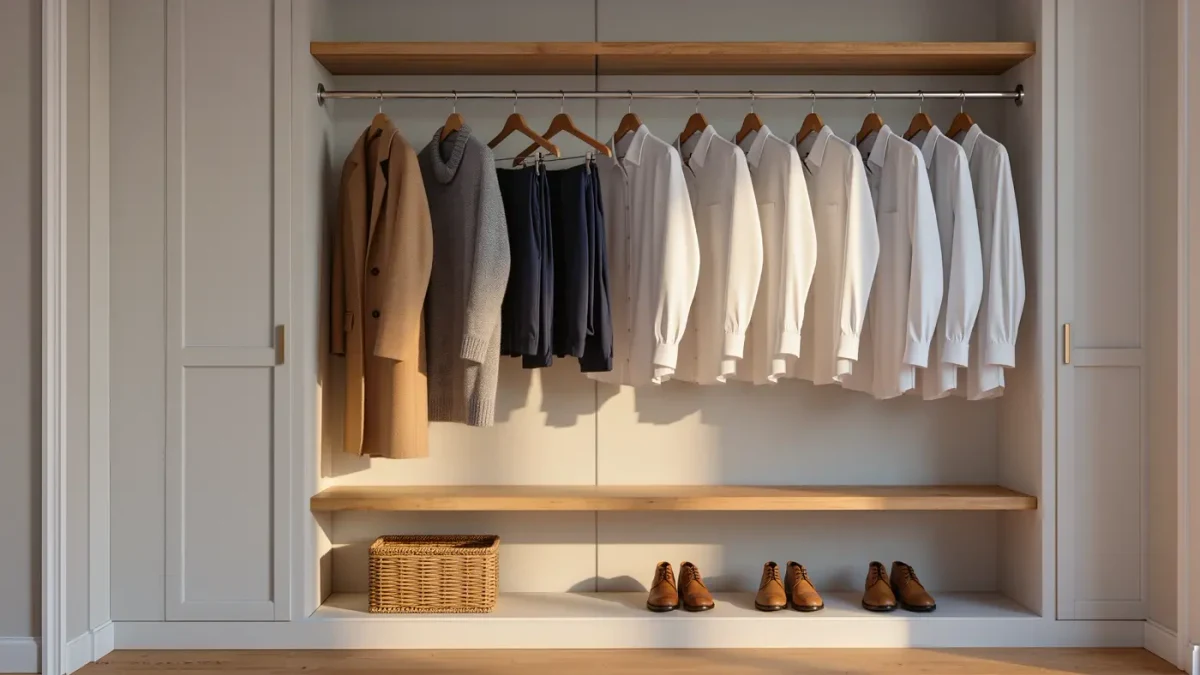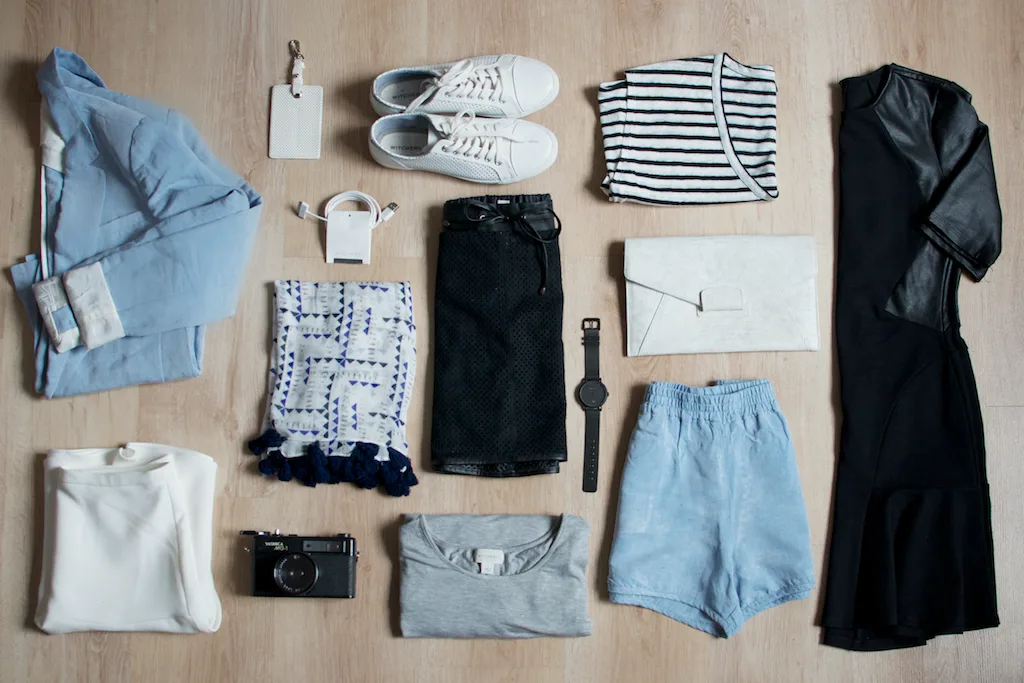
A capsule wardrobe is a small set of clothes — usually somewhere between 25 and 40 pieces per season — where every top works with every bottom, built around your real life instead of a fantasy one. London boutique owner Susie Faux coined the term in the 1970s to sell the idea of a tight edit of well-cut pieces that don't expire. Donna Karan pushed it into the mainstream in 1985 with her 'Seven Easy Pieces' collection, which dressed one woman for a whole working day in seven interchangeable items. That's the actual lineage. Not a khaki flat-lay with the caption 'minimalism.'
What it is not, despite the algorithm's best efforts, is a specific color palette, a beige trench, or a 30-item list someone is selling you as a downloadable PDF.
How many pieces is a capsule wardrobe, really?
Anywhere from about 25 to 40, depending on climate, laundry access, and how often you're expected to show up somewhere with a dress code. The number was never the point. Faux's version was about fit and coordination — a dozen or so core pieces refreshed seasonally with a few inexpensive trend items. The counting obsession came later, when the concept got absorbed by decluttering culture and turned into a spreadsheet.
If a number helps you, use one. If a number makes you donate your winter coat in November because you're at 31 items, abandon the number. A capsule that doesn't cover your actual week is just a small wardrobe with better branding.
What does a working capsule actually contain?
Strip away the aesthetic and the functional version looks like this: one or two outer layers you actually wear, three to five bottoms, five to seven tops, one dress if dresses are your thing, shoes for the two or three situations your life contains, and a bag. Everything else — the occasionwear, the swim stuff, the gym kit — lives outside the capsule and that's fine. Nobody is folding a sequin dress into the system. It exists for the wedding in March and then it goes back into exile.
The test for each piece is boring and effective: name the last time you wore it, and name two things currently in the closet it works with. If either answer is a shrug, the piece is decoration.
Why did the capsule idea get so beige?
Because a constraint is easy to sell when it comes with a mood board. Somewhere between Faux's boutique and the 2010s blog era, 'capsule wardrobe' merged with minimalism and a neutral color story, and the palette became the product. Search the term now and you get oatmeal knitwear arranged at a forty-five-degree angle — a look, not a system.
The quiet truth is that a capsule works in any palette. If you love color, build the capsule in color; the coordination math is identical. The beige monopoly says more about what photographs well than what dresses well, and your wardrobe is not a mood board. It's a Tuesday.
Is a capsule wardrobe actually cheaper?
Usually, but not the way people expect. The savings come from the decision layer, not the shopping layer: when the wardrobe is coordinated by design, you stop buying single-use pieces — the top that matches exactly one skirt — and stop panic-buying before events because nothing 'goes.' Cost per wear, the unglamorous god metric, goes up on everything you own.
The trap is the setup phase. If you respond to the concept by throwing out half your closet and buying a full new 'capsule' in one weekend, you've just done a very expensive haul with extra steps. Real capsules get built from what you already wear on repeat, then patched with a few deliberate purchases over a year. Slowly is the method, not a personality flaw.
Does a capsule wardrobe kill personal style?
Only if you build it out of someone else's list. The original idea was never about owning less for its own sake — it was about owning things that fit, so getting dressed stops being a negotiation. Personal style lives in the margins anyway: the wrong-right shoe, the jacket that's slightly too much, the earrings doing all the work. A capsule gives those margins room instead of drowning them.
Think of it as a chord progression rather than a song. The structure is fixed and a little dull on paper; what you play over it is entirely yours.
How do you start a capsule wardrobe this year?
Backwards, from your life. List the situations you're actually in during a normal month — commute, desk, couch, dinner, whatever — then check which existing pieces already cover them and wear constantly. Those are the capsule. Wear the edit for a month, write down what you reached for and what failed, and only then buy the missing pieces, ideally the boring ones: the coat, the shoe, the trouser that fits. Replace on wear-out, not on season change.
It is a maintenance habit, not a renovation. Which is precisely why it works — and precisely why nobody can sell you the real version in a flat-lay.
FAQ
Who invented the capsule wardrobe? London boutique owner Susie Faux coined the term in the 1970s, arguing for a small edit of well-fitted, coordinating pieces refreshed each season. Donna Karan's 1985 'Seven Easy Pieces' collection brought the idea to a mainstream runway audience and cemented the concept in fashion history.
How many items should a capsule wardrobe have? Most working versions land between 25 and 40 pieces per season, but the count matters less than coordination. If every top pairs with most bottoms and every piece covers a real situation in your week, the system works at 20 or at 50.
Can a capsule wardrobe include trends? Yes — and the original version planned for them. Faux's model paired durable core pieces with a few cheaper seasonal items for fun. Buy trends at the shallow end of your budget, let them leave when they expire, and keep the core untouched.