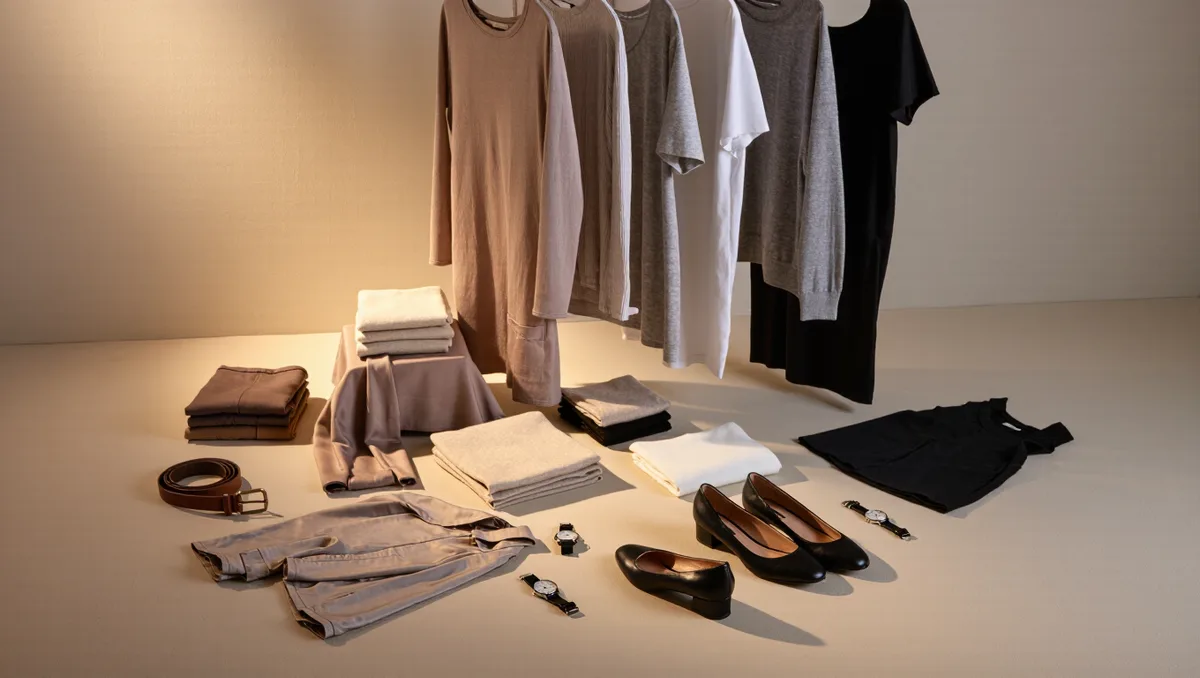
Dressing for your actual life means building your wardrobe from the week you have — school run, desk, gym, couch, dinner — instead of the week an aesthetic implies. Every aesthetic wardrobe sells you a fictional calendar: 'clean girl' assumes Pilates mornings and matcha meetings, 'dark academia' assumes a library and a blazer-friendly climate, 'coastal grandmother' assumes linen weather and a house near water. If your Tuesday is a commute, a spreadsheet, a grocery run and a couch, an aesthetic-built closet fails at its only job — getting you dressed — no matter how good it looks in a carousel post. The fix is a calendar-first audit, and it takes about an hour.
What does an aesthetic wardrobe get wrong?
It optimizes for the photo, and the photo is not a situation. Aesthetic dressing is built around a highlight-reel day — the market stroll, the café laptop session — while your real week contains the unphotogenic majority: the 7 a.m. school run, the office where the heating is set to 'tundra,' the third gym session, the two hours of horizontal streaming. When clothes are bought for the 10 percent of life that gets posted, the 90 percent runs on whatever's left, which is how someone with a closet full of linen co-ords ends up living in one pilled hoodie.
The tell is unworn tags. A wardrobe full of pieces you love in images and never reach for on real mornings is an aesthetic, not a wardrobe.
How do you audit your wardrobe for your real week?
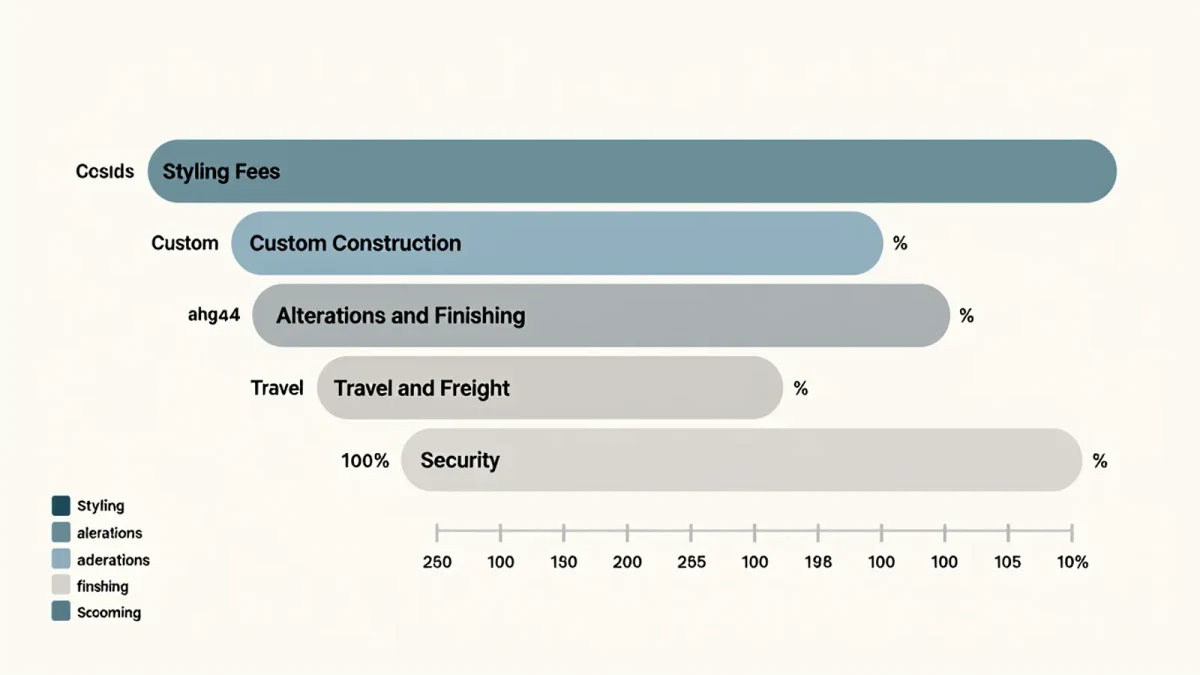
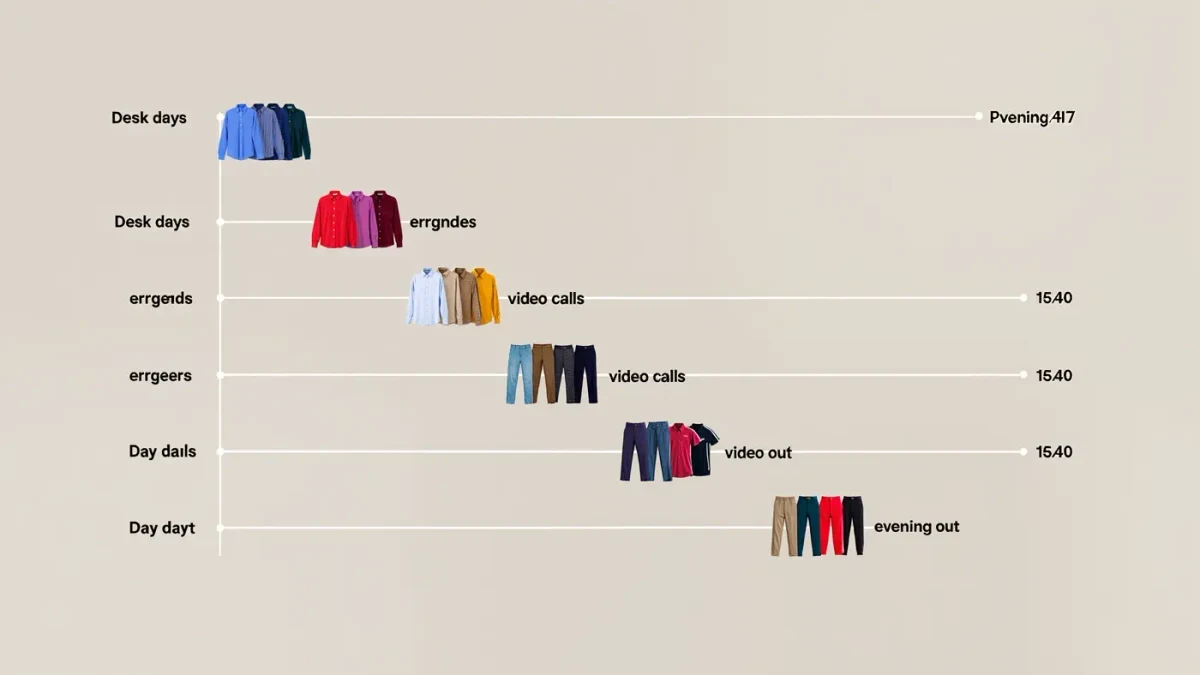
Write down your actual recurring situations, with percentages. For two weeks, jot where you went and what you wished you were wearing — or just reconstruct a normal month from memory: commutes, desk days, workouts, errands, dinners, the weekly thing you always forget. Convert it to rough shares: maybe 40 percent desk-adjacent, 20 percent errands and transit, 15 percent couch, 15 percent sweat, 10 percent occasions. Then compare against what the closet actually contains. The gap between the two lists is your entire wardrobe problem, stated in one page.
Most people discover the same inversion: clothes for the rarest occasions, gaps in the daily ones. Occasionwear hogs the real estate; Tuesdays get the leftovers.
Does this mean giving up on style?
The opposite — it's the only way style survives contact with reality. Personal style is a language, and it needs daily sentences to stay fluent. Dressing for your real life just means expressing your taste in fabrics cut for it: if your uniform is tailoring but your calendar is remote work, buy the soft tailoring that works at a desk chair; if you love color but your week is gym-heavy, color goes into the bags, the sneakers, the outerwear — the layer you actually wear in public. Taste moves to where the hours are. It doesn't retire.
The most stylish people you know are rarely wearing the most interesting clothes. They're wearing the most rehearsed ones — a small set of real-life uniforms executed at a high level, on purpose, repeatedly.
What is a 'life uniform' and how do you build one?
A uniform is a default outfit formula you've proven you like: say, straight denim, fine knit, leather sneaker, one layer. You build it by noticing what you reach for when you don't want to think — those emergency outfits are your actual style, revealed by behavior instead of aspiration. Write the formula down, then buy duplicates and variations of its parts in rotation, so getting dressed becomes retrieval instead of negotiation. Steve Jobs normalized the concept at the extreme; the wearable version is one formula per situation type, not one outfit for existence.
How much aesthetic is healthy in a wardrobe?
Ten to twenty percent, spent where it counts. Keep the aesthetic pieces that slide into real life — the interesting jacket that works over your uniform, the 'going out' top that also survives dinner with your parents — and skip the ones requiring a fictional occasion to make sense. This is also the budget logic: spend the most on the highest-percentage categories, save on the rest, and let the aspirational 15 percent be the seasoning. A wardrobe that's 100 percent aesthetic is a costume shop with your name on the lease.
How do you transition an aesthetic closet into a real one?
Slowly, through replacement rather than purge. Wear the calendar audit for a season, note which real-life gaps hurt most, and fill those with pieces in your existing palette so everything keeps mixing. Cut the aesthetic purchases first — the hardest muscle to flex is not buying the co-ord that photographs beautifully and fits your life nowhere. Within two or three months the closet reorganizes itself around your actual week, and the funny thing happens: the aesthetic pieces you kept get worn more, because they're no longer competing with fantasy logistics.
FAQ
Isn't dressing for an aesthetic just having personal style? Not quite. Personal style is how you like things to look; an aesthetic is a packaged identity with a pre-written calendar. The first is yours, the second is merchandised to you. If your style happens to match an aesthetic, fine — the test is whether the clothes serve your week or recruit you into someone else's.
How long does a two-week wear audit take? About a minute a day: jot where you went, what you wore, what you wished you'd worn instead. Two weeks is enough to catch the weekly cycle — including the one recurring event everyone forgets until the morning of. Reconstructing from memory works almost as well if you're starting mid-season.
What if my life changes often? Then prioritize the layer that adapts — outerwear, shoes, the third piece — and keep the base simple. A wardrobe built on a stable uniform plus swappable layers flexes across new jobs, new cities, and new weather far better than one built on occasion-specific pieces, which is why frequent movers tend to be uniform people by necessity.