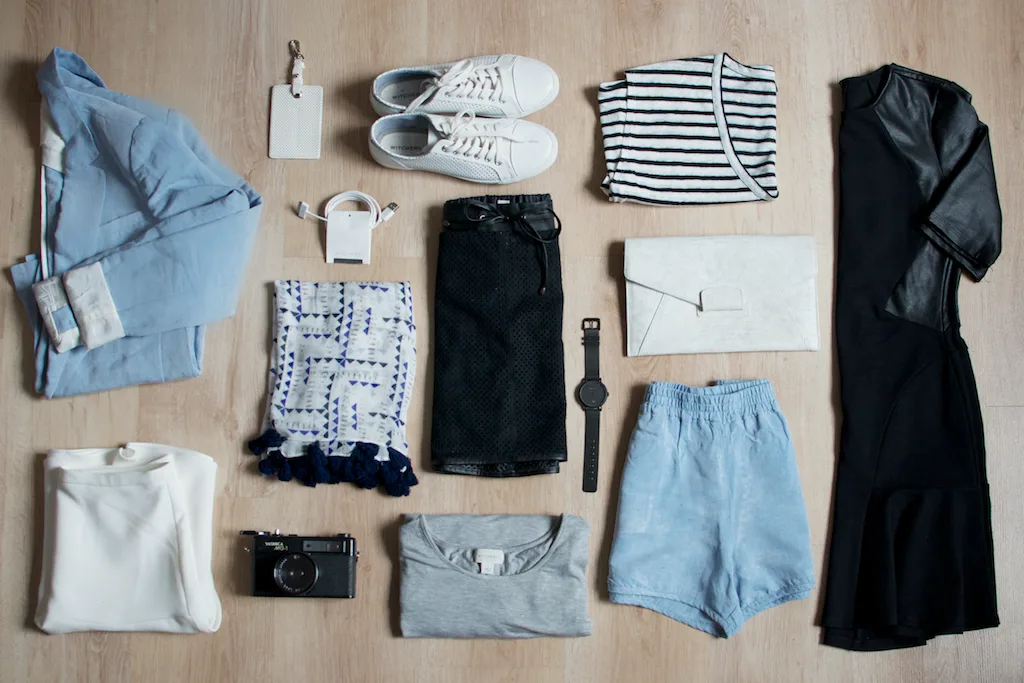
Shopping your own closet means re-merchandising what you already own until it reads like a store: sort everything by type, try pieces in combinations you've never tried, and only write a shopping list after the gaps reveal themselves. Done properly, it takes one afternoon and reliably produces three to five 'new' outfits you've never worn, plus a list that stops future impulse buys. The method is standard stylist folklore — the same editorial trick behind the 'shop your closet' challenge that resurfaces on every platform roughly once a year — and it works because most wardrobes fail at combination, not at inventory.
You don't need more clothes. You need to see the ones you have.
What does 'shopping your own closet' actually involve?
Four steps, in order. First, pull everything out and sort by category — all knits together, all trousers together, all dresses together — because you can't style what you can't see. Second, cull the dead: the torn, the never-fit, the costume-jewelry-tier regrets. Third, recombine deliberately: take one anchor piece and force three pairings, including at least one that feels slightly wrong. Fourth, write down what's actually missing — a specific thing like 'grey crewneck that works under pinafores,' not 'more tops.'
The list is the real product. A closet shop ends in a shopping list of three items or fewer, which is the difference between a method and a mood.
How do you find outfits you've never worn?
Break your pairing habits on purpose. The formula most people fall into — same top with same bottom, forever — is a caching problem, not a taste problem. Force new joins with a few constraints: grab the piece you wore least last season and build around it; style one item outdoors-formal and once couch-casual; put two textures together that never met (silk with denim, knitwear with a slip skirt, tailoring with a tank). The third combo rule applies here too — if a strange pairing survives three mirrors, it was never strange.
Also: shop the back. The front third of any closet is a highlight reel. The pieces in the back were purchased for a reason, and several of them are currently one alteration or one new pairing away from a comeback.
What should you do with the clothes you never wear?
Run the exile system: anything unworn goes into a bag, and the bag goes somewhere out of sight — a suitcase, the top shelf, the car trunk. If you reach for a piece during the exile period, it graduates back into rotation. Whatever is still in the bag after a season gets donated or sold without a ceremony. This is a lower-stakes version of the box method from professional organizers, and it beats the one-shot purge because it's reversible — guilt is a terrible inventory system.
Sell only what has actual resale value; donate the rest promptly. A donation bag that lives by the door for four months is just clutter with a halo.
Can restyling really replace shopping?
For a season, very nearly. Plenty of people run no-buy challenges — a month, a quarter, sometimes a full year — and the consistent finding is that the first weeks feel like deprivation and the later weeks feel like discovery, because the wardrobe's combinatorial ceiling is far higher than anyone's wearing habits. The average outfit rotates through a tiny fraction of what's owned; restyling attacks that gap directly.
What it can't replace is fit. If something never worked because it never fit, restyling won't save it — that's a job for a tailor or for the donation bag. Know which problem you're solving before you spend an afternoon on it.
How often should you shop your own closet?
Twice a year does the heavy lifting — the classic seasonal swap — plus a fifteen-minute version whenever getting dressed starts feeling like a rut. The seasonal session is also the honest moment for the shopping list: buy the two or three real gaps, skip everything the closet already covers. Wardrobes drift; every few months the collection quietly reorganizes itself around new purchases, new habits, and one pair of jeans that changed the whole ecosystem.
Treat it like a restock of a store you actually like. The staff is friendly, the fits are known, and the merchandising could use your attention.
FAQ
What is the exile or box method for clothes? You move all unworn items into a bag stored out of sight for a season. Anything you actively reach for goes back into rotation; anything still in the bag after the season ends gets donated or sold. It's reversible, so it sidesteps the regret that makes purges feel risky.
How long does a full closet shop take? Two to four hours for a first pass, depending on wardrobe size and how honest you're prepared to be about the pile on the bed. After the first session, seasonal maintenance runs closer to an hour, because the sorting logic is already in place.
What should my shopping list look like afterward? Three specific items maximum, each phrased precisely enough to search for: 'cream fine-knit that layers under blazers,' not 'a sweater.' Specificity is the entire defense against the next impulse haul — vague lists leak.