Your lip balm has a waitlist because scarcity became a marketing channel: brands now launch lip products in deliberately small drops, let TikTok do the advertising, and use email sign-up lists to convert sold-out frustration into a captured audience for the restock. The template came from sneakers and streetwear, and by the mid-2020s it had fully colonized the beauty aisle. A balm is the perfect vehicle for it — cheap to make, cheap to ship, emotionally oversized. Nobody needs a waitlist for petroleum jelly. That was never the point.
The tube is the product. The queue is the brand.
How did a basic product become a drop?
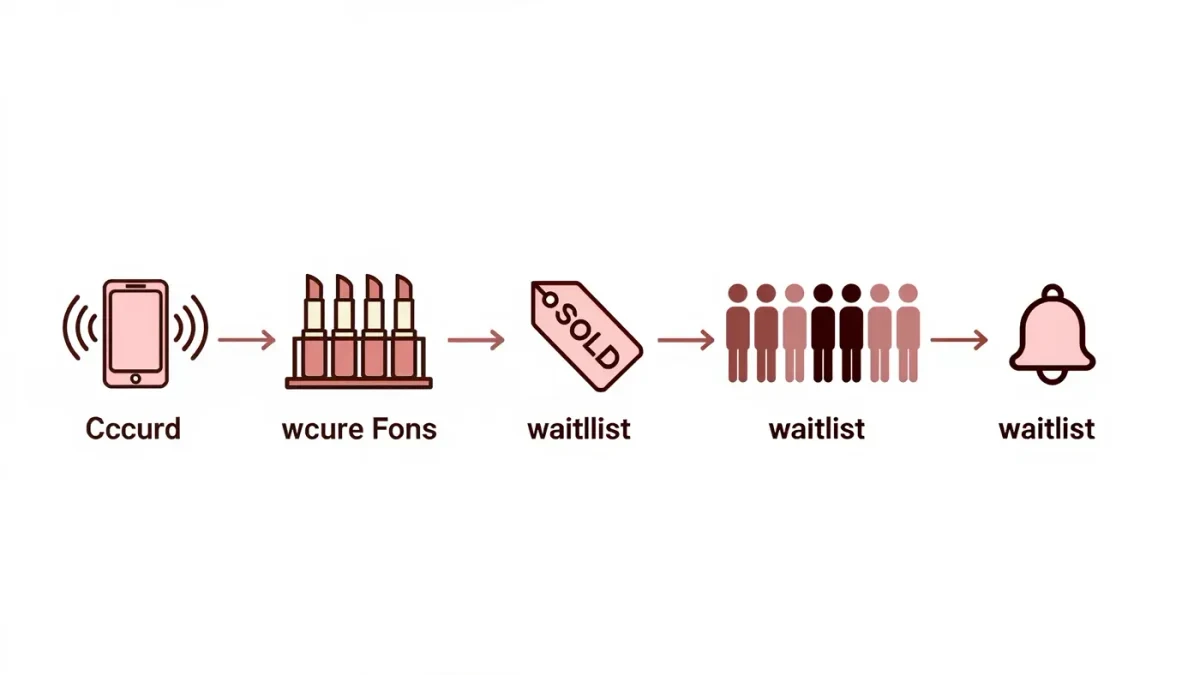
The mechanics are borrowed almost wholesale from sneaker culture. A brand announces a limited quantity, the product sells out within hours — sometimes minutes — and the sellout itself becomes the content. Screenshots of 'sold out' pages circulate as proof of heat, restock alerts get screenshotted back, and every TikTok of someone finally getting the tube functions as a free ad the brand never had to pay for.
The waitlist formalizes it. Instead of losing a frustrated customer, the brand captures an email address, which is now a marketing asset with a known value. The customer who signs up for a restock alert ends up receiving launch announcements, loyalty pushes, and early-access offers. From the company's side, the waitlist also works as demand forecasting: the queue tells the supply chain exactly how many units to make, which lowers the risk of limited runs. Scarcity, in other words, pays for itself twice.
Which brands started the lip balm waitlist era?
The most documented example of the pattern is Summer Fridays — founded in 2018 by influencers Marianna Hewitt and Lauren Gores Ireland — whose Jet Lag mask and later Lip Butter Balm became fixtures of the sold-out-and-restocked cycle that defined late-2010s and early-2020s beauty launches. Laneige's Lip Sleeping Mask, a Korean formula that predates the TikTok era, became the category's reference point after going massively viral on the platform, turning a sleeping-care staple into the balm everyone's tote already contains. Glossier's Balm Dotcom, meanwhile, spent years as the cult object that proved people would build a personality around a lip product.
None of these companies invented scarcity — Supreme did, roughly, for a generation of marketers. What beauty did was perfect the soft version: fewer campouts, more push notifications, and a product category where the emotional stakes are hilariously high for something that costs less than lunch.
Why lip balm specifically?
Because balm is the cheapest possible object to mythologize. A serum carries ingredient obligations — actives, percentages, claims a regulator might ask about. A balm carries flavor, texture, and a shade name, which is to say it carries vibes. It is also an entry price: twelve to twenty-five dollars buys a piece of the brand, which makes it the first thing a new customer tries and the easiest thing to over-collect.
The collection dynamic matters more than anyone admits. One balm is a product; five flavors are a shelf display, and shelf displays photograph well. The category's growth in the 2020s tracked exactly with 'vanilla girl' aesthetics and lip-combo tutorials, formats in which the balm is both the tool and the set decoration. A waitlist simply tells the collector which balm is worth owning next.
Is the waitlist artificial?
Sometimes, and nobody in the industry pretends otherwise in private. Genuine supply constraints exist — a viral spike can outrun a production line, and small brands do run out. But the limited-drop launch is now a deliberate strategy taught by every beauty-industry consultancy, because it generates more attention per unit than full availability ever does. Demand you can see is worth more than demand you can serve.
The tell is the rhythm. A brand that restocks in small, announced batches every few weeks is running theater; the product is never really gone, just rationed. That is not a scandal — it is the sneaker playbook applied to glycerin — but it is worth knowing that the panic is choreographed.
What does the waitlist era mean for shoppers?
Practically: the product you want will come back. Restocks for established viral balms are routine, resale premiums on lip balm are a bad trade, and the fear-of-missing-out is the actual thing being sold. The smart move is boring — sign up for the alert, buy one when it lands, skip the stress-scrolling. A balm that costs more than its retail price from a reseller is not a beauty purchase. It is a tax on impatience.
The stranger effect is what it does to taste. When availability drives desire, formulas stop mattering and drops start mattering, which is why half the viral balms of the decade feel identical on the lips and completely different on the feed. The waitlist does not just hold your place in line. It tells you what to want before you get there.
Do waitlists actually work for brands?
Emphatically, which is why they spread. A sold-out launch earns more organic reach than a paid campaign of the same budget, the email list compounds across future launches, and the restock cycle keeps the brand in the conversation for months instead of a week. For a low-cost, high-margin product like balm, the math is almost unfair. The queue is doing the marketing, and the customers are doing it for free.
Will the waitlist era end?
It will fade the way all scarcity plays fade — through exhaustion. Beauty has run this script before with limited-edition palettes and collab drops, and each cycle ends when customers stop feeling lucky to be allowed to spend money. Until then, the balm stays sold out, the list stays long, and the tube stays famous. Rare, in 2026, is a texture.
Why do brands limit quantities on purpose?
Because a small run that sells out builds more demand than a large run that sits. Limited drops concentrate attention into a single news moment, guarantee press coverage of the sellout, and turn every restock into a second launch. The cost is some short-term revenue; the return is an email list and a waiting audience for the next release.
Are viral lip balms actually better formulas?
Not reliably. The formulas behind the most-waitlisted balms tend to be pleasant, well-textured, and broadly similar — occlusives, emollients, a flavor or scent. What separates a viral balm from a drugstore classic is packaging, story, and distribution strategy, none of which moisturize your lips. The drugstore shelf remains undefeated on pure function per dollar.