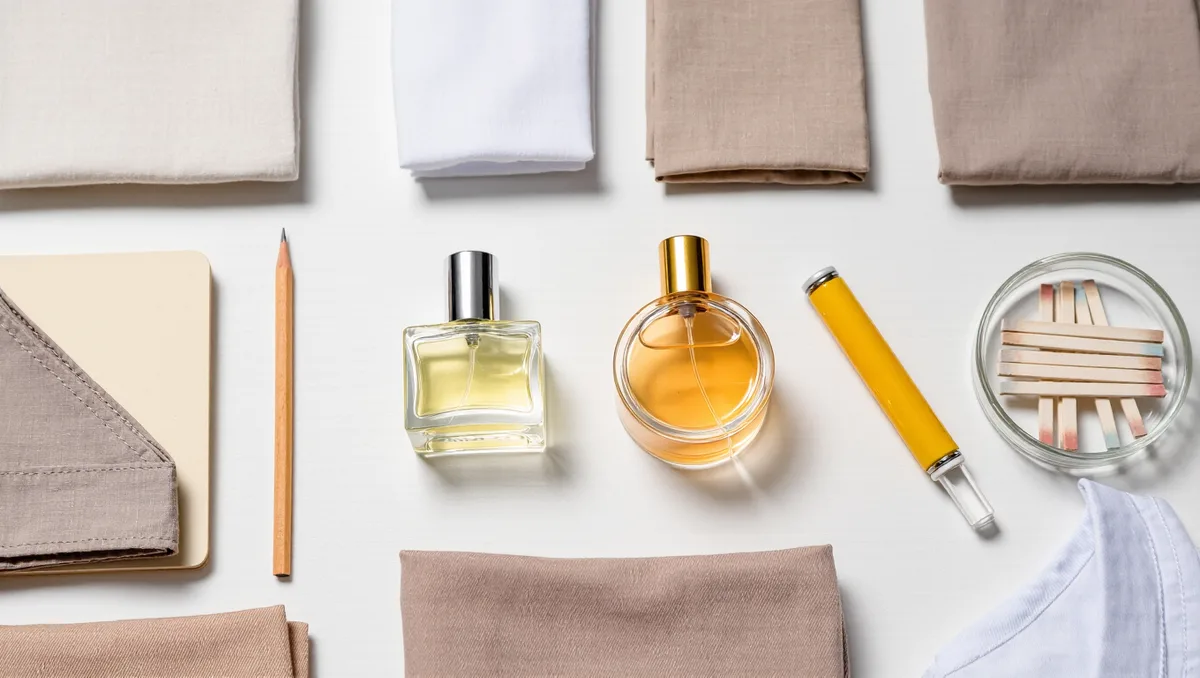
Perfume minis — travel sprays of roughly 8 to 12 milliliters — dominate bag culture because they hit the exact intersection of modern fragrance habits: touch-up rituals on camera, a collector's appetite for variety, and a price of entry below fifty dollars in a market where full bottles now routinely cross two hundred. What was once a duty-free convenience became the category's growth engine, with subscription decant services like Scentbird, founded in 2014, normalizing the small format years before TikTok made the mini a shelf aesthetic. The bottle shrank. The market grew. That trade was the whole idea.
A handbag, it turns out, is a point of sale that fits in a handbag.
What counts as a perfume mini?
The format runs from 5-milliliter splash vials to 10- to 12-milliliter travel sprays, sold either by the fragrance house itself or by decant services that split full bottles into portions. Discovery sets bundle several minis as a tasting flight; refillable travel cases let one full-size bottle feed a pocket-sized atomizer. The mini is not a sample — samples are free and disposable, while minis are a purchase with real juice, real packaging, and a real slot in a rotation.
The distinction matters because it is the entire business model. A sample asks for nothing. A mini asks for a decision, and decisions are where brands make money.
Why are minis suddenly everywhere?
Three forces converged. First, price: as niche and designer fragrances climbed well past the two-hundred-dollar mark through the 2020s, the mini became the only emotionally satisfying way to keep buying — a full-price habit at a fraction of the ticket. Second, the shelf video: PerfumeTok content lives on collections displayed and carried, and a drawer of twelve full bottles is wealth, but a bag of twelve minis is personality. Third, the touch-up ritual itself became content, and nobody re-sprays a 100-milliliter flacon at a restaurant table.
There is also plain logistics. Minis survive handbags, gym bags, and airport security with equal indifference. The format fits the life the customer is actually living, which is more than most 3.4-ounce bottles can claim.
Did minis come from travel retail?
Yes — travel sprays existed for decades as an airport convenience and a gift-with-purchase staple, and the refilling ritual of carrying a decanted portion goes back further than any brand will admit. The modern shift was positioning: fragrance houses stopped treating the small format as an accessory to the bottle and started treating it as the entry point to the brand. Luxury houses now stage minis as collectible objects in their own right, and discovery sets became the standard first product a new fragrance customer is offered.
Decant services industrialized the in-between. By splitting bottles into subscription-sized portions, they proved the demand data that full-bottle marketing had guessed at — people want rotation, not loyalty to one scent. The houses, eventually, priced that insight in.
Are perfume minis a better deal?
Per milliliter, no — minis carry a premium, sometimes a steep one, and the decant market is even pricier per unit volume. What you are buying is optionality: the right to wear six scents in a month instead of one, to abandon a fragrance after twenty wears guilt-free, and to test a viral scent for a season before committing three figures. Judged as insurance against a bad full-bottle purchase, the mini premium frequently pays for itself.
The honest way to think about it: minis are renting perfume the way streaming rented film. You trade efficiency for breadth, and for most people at most budgets, breadth is the better subscription.
What does the mini boom say about fragrance culture?
That scent went from signature to wardrobe. A generation raised on 'one perfume, one identity' now treats fragrance as a daily accessory matched to weather, mood, and outfit — and a wardrobe needs small hangers. The mini is the format of a culture that documents itself: visible in the bag snapshot, portable to the office, chic in the frame. Big bottles live on dressers. Small bottles live in the content.
There is a quieter reading, too. In a beauty economy where participation keeps climbing in price, the mini is the last democratic luxury on the shelf — a fifty-dollar doorway into a two-hundred-dollar room. Every era of status goods eventually discovers that the future of the brand is sold in its smallest package.
Do minis make good gifts?
They are the safest gift in fragrance, which is exactly why they sell so well in sets. A full bottle is a bet on someone else's skin chemistry and taste; a set of minis is five bets, any one of which can land. For the giver, it reads considered and generous; for the receiver, it is a tasting menu instead of a commitment. Gifting has quietly become one of the mini format's largest lanes.
Will the mini boom last?
The format will outlast the frenzy, because its advantages are structural rather than aesthetic: price of entry, portability, and the way discovery sets feed the full-bottle funnel. The fashion cycle may move on from bag shots of tiny bottles the way it moves on from any prop. But once a category teaches customers to buy small first and commit later, it does not unteach them. The mini stopped being a sample. It is the store now.