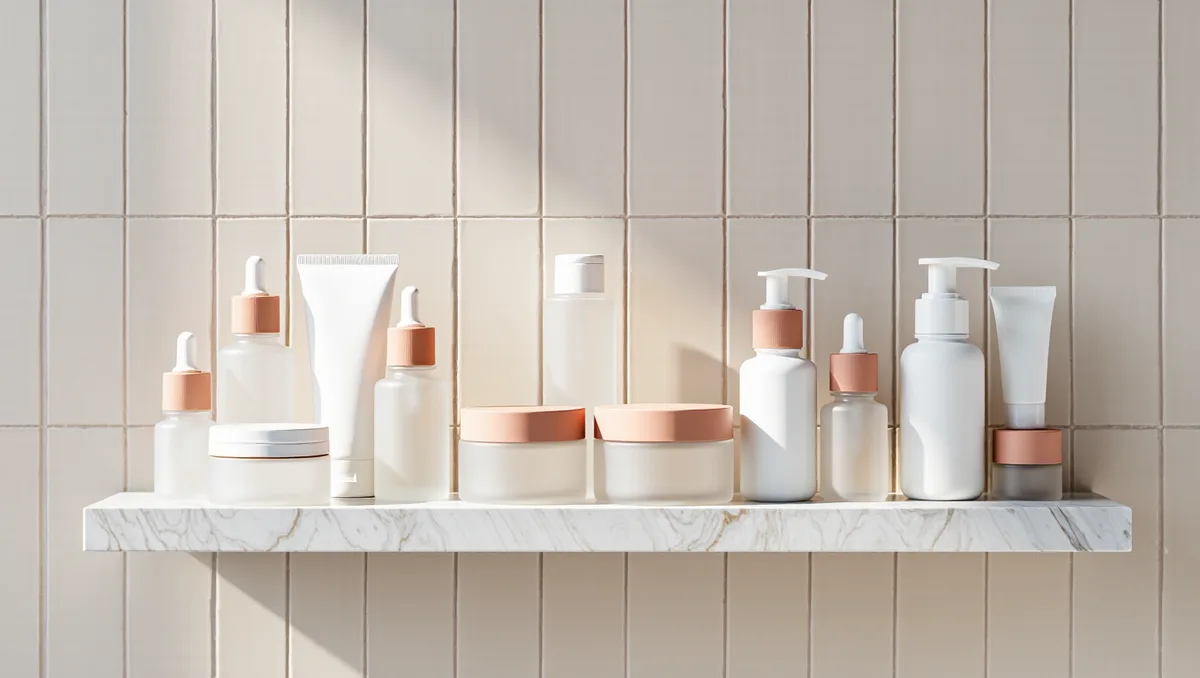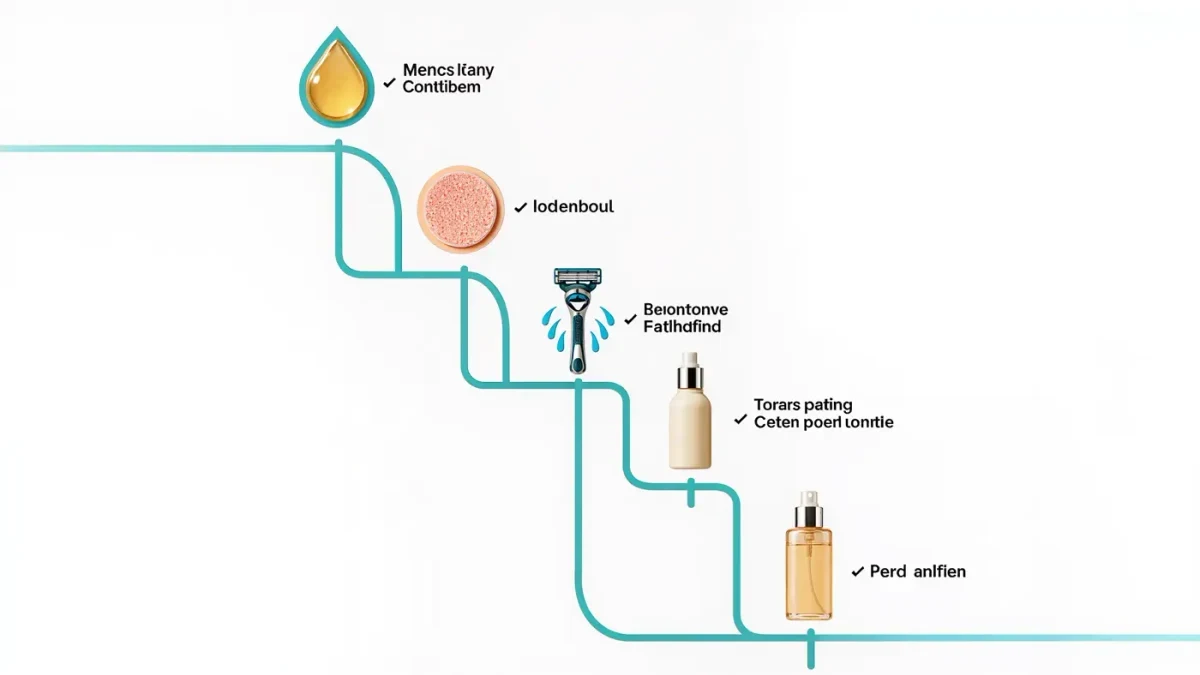
Every brand wants your shower routine because the shower is the last big unclaimed surface in beauty: facial skincare saturated a decade ago, and body care became the growth lane — a shift documented across the 2020s as 'everything shower' content took over TikTok from roughly 2022 onward, body serums became a standard category, and once-skincare-only brands raced onto the body shelf. The logic is plain retail math. Everyone showers daily, the aisle already hosts loyalty habits, and a routine that once meant two products — soap and a torturous loofah — now supports eight: pre-wash scalp oil, exfoliant, body wash, body serum, shave butter, moisture stick, and a fragrance mist to seal the deal. The rinse did not change. The receipt did.
Your shower used to be a chore with a bar of soap in it. It is now a content genre, a product category, and the most contested square meter in beauty.
What is the 'everything shower'?
The everything shower is the internet's name for the full-production version of a shower — exfoliation, hair mask, shave, deep condition, body care layering — as opposed to the functional 'something shower' of everyday rinsing. The format went viral on TikTok around 2022 as both routine content and self-care shorthand, and it did what viral formats do best: it created an aspiration, then a checklist, then a shopping list. Each step of the ritual maps to a purchasable product, which is why the beauty industry adopted the meme faster than any other piece of internet vocabulary.
The genius of the framing is the pairing. By naming the everyday shower as the lesser version, the trend converted a basic habit into a weekly upgrade project. Upgrade projects come with receipts.
Why is body care suddenly the growth category?
Because the face ran out of problems to solve — or rather, out of unsolved problems to monetize. Facial skincare went through a decade of ingredient innovation, and by the mid-2020s the shelf was crowded, the customer was educated, and the margins were competitive. Body skin, by contrast, arrived barely branded: the leading products were scented washes and lotions with ingredient stories from the 1990s. The skincare-ification of body — acids, actives, serums — was the obvious frontier, with brands like Nécessaire, which launched its body serum in 2019, credited as early movers in treating the body like a face.
Sol de Janeiro supplied the demand proof: its Bum Bum Cream, carried by Beiersdorf after its 2017 acquisition, became one of the most visible viral body products of the 2020s, and its fragrance-mist business showed that a shower-adjacent product could sell like a prestige perfume. The rest of the industry read that as an instruction.
What products colonized the shower shelf?
The modern lineup reads like a facial routine translated to the body. Pre-wash scalp oils and exfoliating scalp scrubs, borrowed from the hair-oiling revival. Chemical exfoliants for the body — glycolic and lactic acid lotions with dermatologist-attributed claims about texture and bumps. Body serums with niacinamide, hyaluronic acid, and retinoids, launched by facial brands extending downward. Shave-specific products, ingrown treatments, barrier creams, and the in-shower moisturizer that promises to skip the post-shower step entirely.
Even the water got productized: filtered showerheads — brands like Jolie, founded in 2021, led the charge — turned the plumbing into a beauty device with claims about hair and skin benefits attributed to hard-water minerals and chlorine. When the tap itself has a marketing story, the territory is fully mapped.
Is a multi-step shower routine necessary?
Necessary, no; effective for specific concerns, often yes. A basic shower needs only a gentle cleanser and a moisturizer applied after — the core advice dermatologists repeat. The expanded routine earns its shelf space where there is an actual issue: chemical exfoliants for rough texture, targeted washes where a dermatologist has diagnosed a need, scalp treatments for documented scalp conditions rather than vibes. The claims belong to their brands and studies; the routine belongs to your skin, which is allowed to be low-maintenance.
The honest test is subtraction, not addition. If removing a step changes nothing you can see or feel in two weeks, the step was content, not care.
Why did the shower become content?
Because it is the perfect camera set: water, steam, warm light, a private space made public by permission of the frame. Shower videos deliver the same ASMR satisfaction as cooking content with the added intimacy of ritual — and the genre skews toward long, satisfying product sequences that showcase texture in a way no campaign photo can. Brands noticed early. Seeding products into shower content became a standard marketing channel in the early 2020s, which is why the same bottles keep appearing on your feed and your bathroom shelf in that order.
There is a cultural reading here too, and it is not trivial: the everything shower reframed routine maintenance as deserving occasion. In a burnout economy, a ninety-minute shower with a playlist is the cheapest spa left — self-care at tap temperature. The brands are not selling cleanliness. They are selling the staging of that occasion.
Will the shower gold rush last?
The attention will rotate; the shelf will not shrink back. Once a category educates its customer — and the 2020s educated everyone on body acids, scalp care, and shower filtration — the expectations stay raised even as specific products churn. The next front is consolidation: facial giants acquiring body brands, mass retailers building dedicated 'shower routines' endcaps, and the line between the hair, body, and fragrance aisles dissolving entirely. The everything shower won. The bathroom is an aisle now.