Sneakers now go with everything except the few things they shouldn't — and the trick to telling those apart is simpler than any rulebook: the sleeker and quieter the shoe, the wider its range. A clean low-top leather sneaker works with tailoring, denim, slip skirts, and most wedding-adjacent situations; a chunky tech runner has a smaller, louder territory. The normalization happened fast. Court classics were Office Casual by the late 2010s, and by the 2020s the white leather sneaker had become the neutral that outfits are built on — the fashion equivalent of a plain background track playing under everything. This is the field guide to what actually pairs, what fights back, and when to leave them home.
Which sneakers work with tailoring?
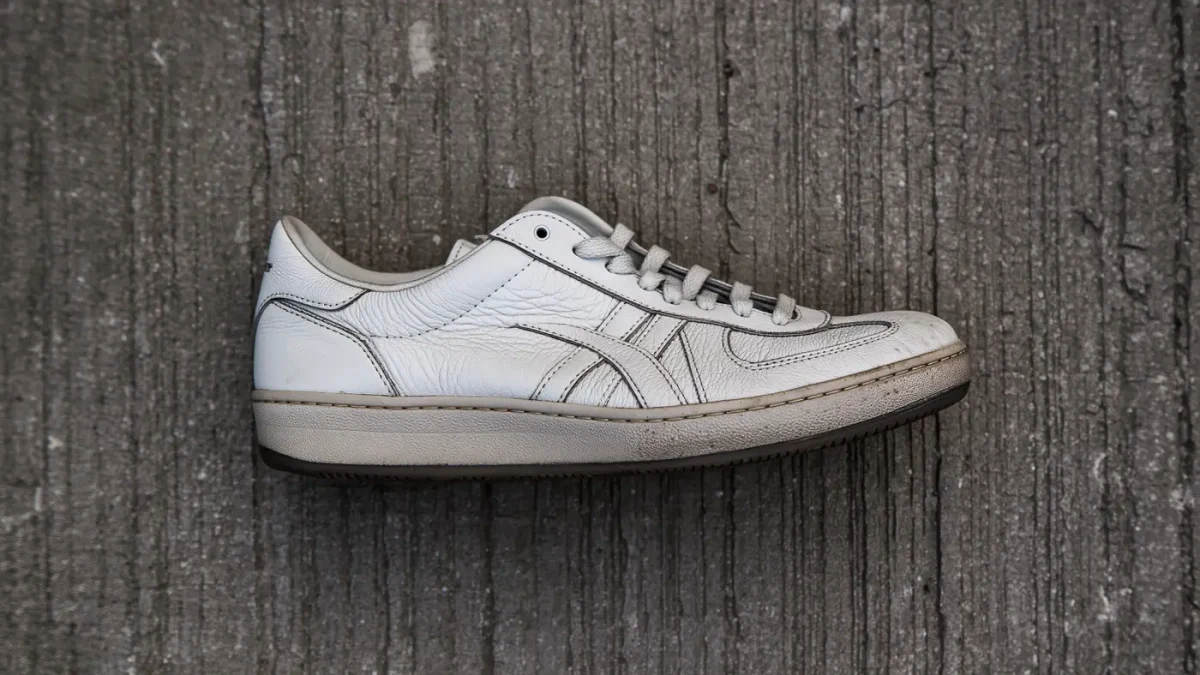
Minimal leather low-tops, ideally in white, off-white, or black, with a slim profile and no visible tech. Think court shoe, German Army Trainer lineage, or the plain 'tennis shoe' silhouette — shapes whose ancestors predate the gym. The pairing works because the visual languages rhyme: a sharp trouser break and a clean leather upper share the same minimal vocabulary. The failure mode is chunk and noise — a ballooned sole under a pressed trouser makes the whole leg look like a rendering error, and a neon swoosh under a suit turns the suit into a costume.
Proportion detail: slim sneakers want tapered or straight trousers that end at or just above the shoe; wide-leg trousers want a low-profile sole so the shoe doesn't vanish entirely.
What do chunky sneakers actually pair with?
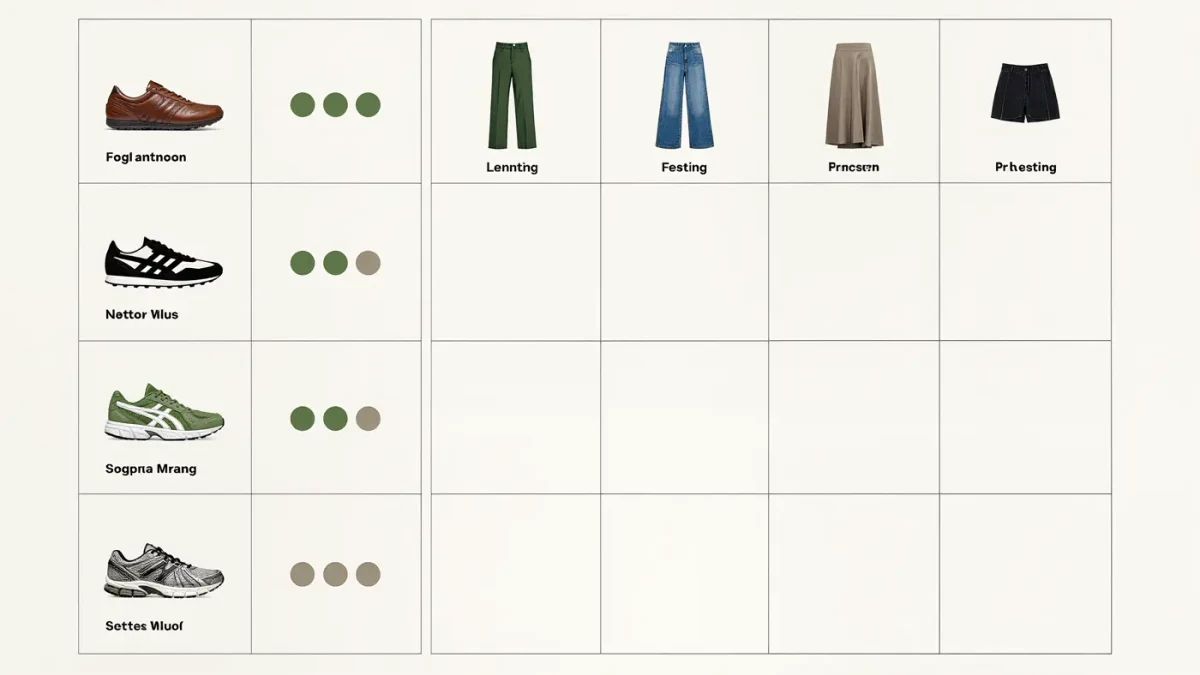
Volume with volume, deliberately. The chunky sneaker — the dad shoe wave that crested after 2017 and never fully left — works with wide denim, long shorts, slip skirts, and oversized outerwear, because the outfit can answer the shoe's mass. It fights with slim tailoring and delicate fabrics, where it lands like a punchline nobody ordered. One loud element per outfit is the standing rule: if the sneaker is a statement, the rest of the fit speaks at a normal volume.
Can you wear running sneakers as everyday shoes?
You can, with one distinction: performance runners are gear, and lifestyle runners are style. The mesh stability shoe you actually run in is built for forward motion and ventilation, not for pairing — it reads as errand-core, which is a legitimate register but a narrow one. Retro-styled runners — the suede-and-nylon track silhouettes of the 1970s and 2000s revived so hard in the early 2020s — were designed by the industry specifically to look good with clothes, and they do: jeans, trousers, even shorts-and-sock-dressing that took over the middle of the decade.
What should sneakers never be worn with?
Short list, and it's mostly about formality contracts, not fabric. Black-tie and true formalwear — sneakers there break the costume in a way no stylist can reframe. Job interviews in conservative fields, funerals, and the rare restaurant with an actual dress code: the setting is making a promise and the shoe breaks it. Beyond that, the honest answer is 'increasingly little.' Sneakers with eveningwear has been a red-carpet subplot for a decade, and office norms softened to the point where a clean minimal pair is the default in many industries. The veto power moved from the shoe to the situation — check the room, not the rulebook.
How many pairs does a functional rotation need?
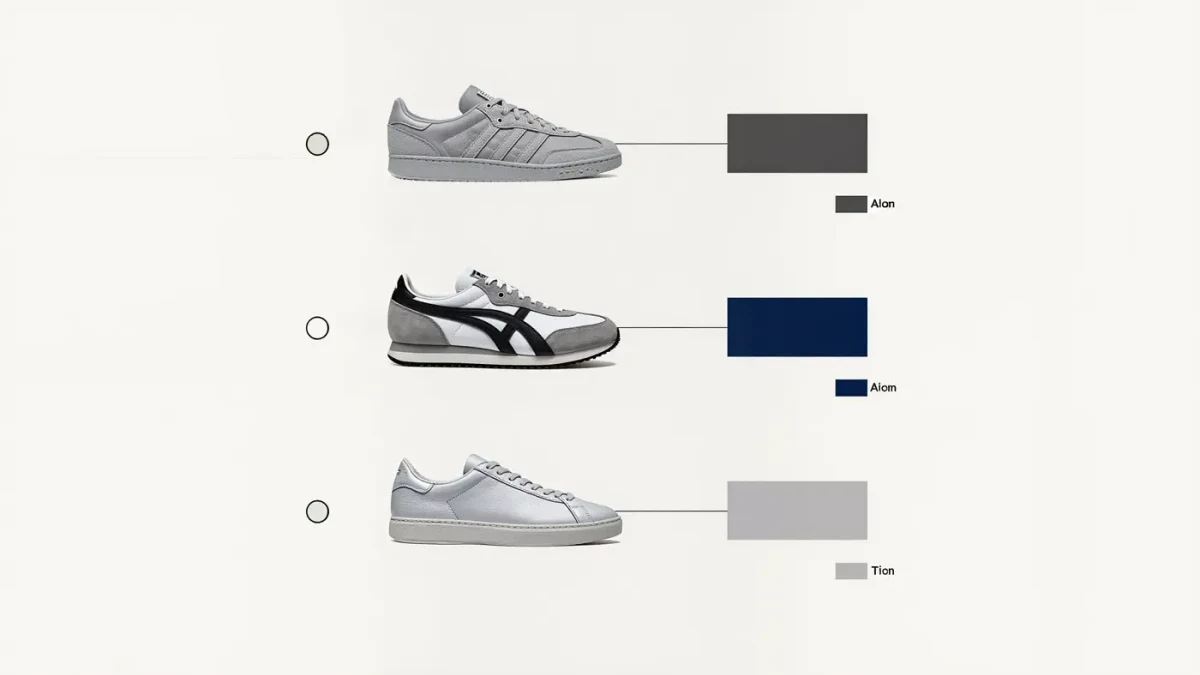
Three covers nearly all of it: a clean minimal leather low-top for everything tailored and smart, one casual pair — canvas, retro runner, or chunky silhouette — for denim and weekend register, and one performance or weather shoe for actual sport and actual rain. That's the whole decision tree. Everything beyond three is taste, collection, or marketing, which are all fine reasons, just not functional ones.
How do you keep white sneakers white?
Prevention over rescue: wipe them down after wear while the dirt is still a rumor, use a protectant spray on new pairs, and accept the patina after that — creased leather and faded canvas are part of the medium. Sneaker-cleaning kits and mid-tier wipes handle most real situations; a machine wash is a last resort for canvas only, and even then, cold and in a bag. The deeper trick is rotation: wearing the same pair daily ages them four times faster than alternating between two.
Are expensive sneakers worth it?
Up to a point, and the point is low. Above roughly the $150 mark you're mostly buying collaboration premiums, hype cycles, and resale theater — documented dynamics of a collector market that treats shoes like stocks. A well-made minimal leather sneaker from a mid-price brand delivers 90 percent of the look at 40 percent of the price, and unlike hyped pairs, it won't look dated when the cycle turns. Buy the silhouette, not the moment.
FAQ
Can sneakers be worn with a suit? Yes, if the suit is soft-constructed or casual in fabric and the sneaker is a minimal leather low-top with no tech detailing. It's a deliberate-casual statement, not a formal one — the pairing signals ease, and it collapses the moment either element gets too polished or too loud.
What color sneakers are most versatile? White leather, followed by off-white and black. White's brightness grounds tailoring and lifts denim; black disappears under darker fits. Everything else — gum soles aside — narrows the range of outfits the shoe will serve.
Are high-top sneakers harder to style? Somewhat. High-tops visually shorten the leg and add ankle mass, so they pair best with cropped or slim bottoms that let the shoe read, or with shorts in summer. Under long wide trousers they disappear pointlessly; the shape wants to be seen.