Vitamin C works best in the morning because its main job is defensive: applied under sunscreen, topical vitamin C adds an antioxidant layer that helps neutralize the free radicals UV exposure and pollution generate during the day. Reviews of topical research — most cited among them a 2013 review by Pumori Saokar Telang in Dermatology Practical & Conceptual — consistently frame ascorbic acid as a daytime partner to SPF, not a replacement for it. The logic is chemistry, not ritual: antioxidants intercept damage as it happens, and most of that happening is daylight.
Morning is also where most people's vitamin C goes wrong — oxidized bottles, stinging faces, serum the color of iced tea. This guide covers what to buy, how to layer it, and the storage habits that decide whether your bottle lasts three months or three weeks.
Why morning, specifically?
Two reasons stack. First, the environmental argument above: daytime UV and city air are what the antioxidant is intercepting, so the shield should be on before exposure. Second, a compatibility argument from the same literature: vitamin C regenerates vitamin E, and the classic pairing — vitamins C and E together with ferulic acid — was studied in the 2000s as a photoprotective combination. Your SPF remains the actual umbrella. Vitamin C is the rain jacket underneath.
Evening use is not wasted; the ingredient does not evaporate at sunset. But if you are choosing one slot, the evidence leans toward the one with daylight in it.
Which form of vitamin C should you buy?
The ingredient list tells you the temperament:
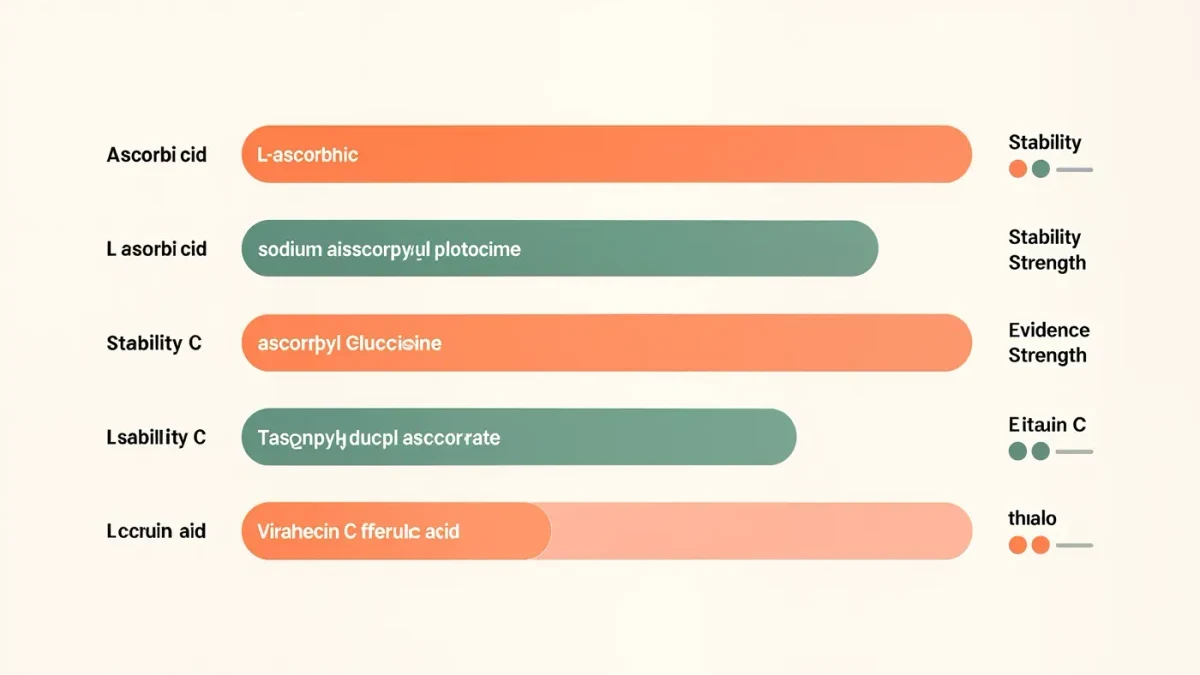
- L-ascorbic acid. The studied original — effective at 10–20% per the published review literature, fussy about light, air, and high pH. Most potent, most likely to sting, most likely to oxidize.
- Sodium ascorbyl phosphate and magnesium ascorbyl phosphate. Stable water-soluble derivatives, gentler, weaker evidence for brightening but far kinder formulas.
- Ascorbyl glucoside and tetraisopalmitate (THD). Oil-compatible and shelf-stable cousins, common in modern serums that do not smell like a hot penny.
If your skin is sensitive, a derivative at a calm 3–5% beats a 20% L-ascorbic acid you will abandon in week two. The best form is the one you reapply for six months.
How do you layer it in an actual morning?
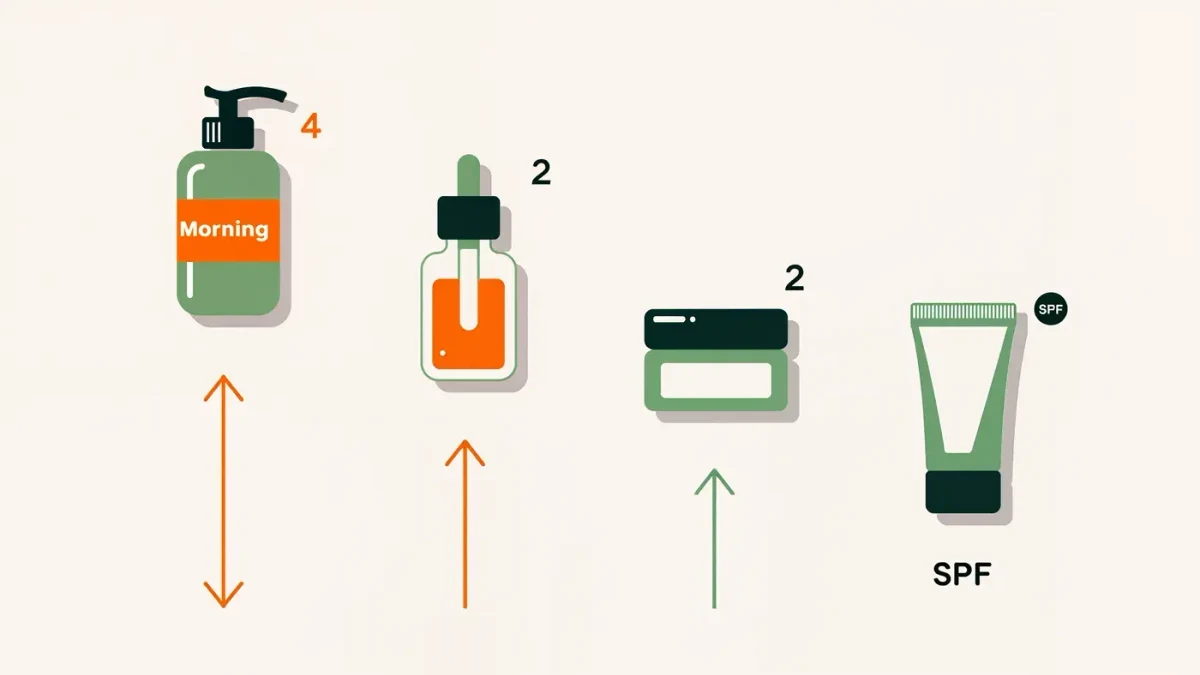
Cleanse, apply vitamin C to dry skin, follow with moisturizer, then sunscreen — and give the serum a minute to settle. The old rule that ascorbic acid 'must' hit bare skin at low pH has relaxed as derivatives have proliferated; with classic L-ascorbic acid serums, dry skin before moisturizer is still the safer order. Retinoids, by contrast, are a nighttime habit by convention, which keeps mornings simple and evenings effective.
If layering stings, alternate: vitamin C mornings, exfoliating acids evenings, never both newcomers in the same week. The 2013 review literature notes that irritation correlates with concentration and low pH, so the dose is yours to negotiate.
Why did my serum turn orange?
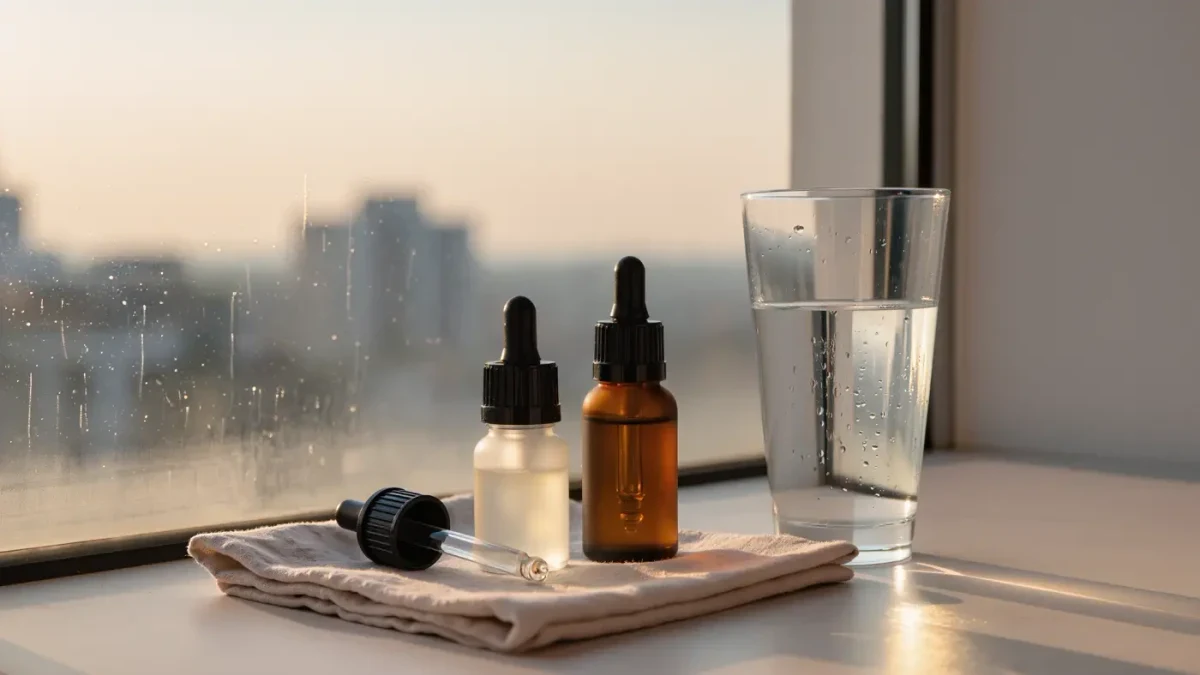
Oxidation. L-ascorbic acid degrades on contact with air and light, losing both color and function — an amber serum is an expired one. Refrigerate the bottle, keep the cap tight, buy smaller sizes, and treat an unusually dark or metallic-smelling formula as a compost candidate. Opaque pumps with airless dispensers outlive droppers by a wide margin; a 2017-published stability analysis of commercial vitamin C serums found significant degradation in commonly stored products well before their use-by dates.
The fandom joke that vitamin C is the sourdough starter of skincare is accurate in one specific way: it is alive, briefly, and then it is not.
What results should you realistically expect?
Over eight to twelve weeks of consistent use, the published literature supports modest improvements in tone evenness and the look of photoaged skin — modest being the operative word. No serum in this category outperforms sunscreen at preventing the damage in the first place. Vitamin C is the supporting act; the headline is a broad-spectrum SPF you actually reapply.
Quick answers
Can I use vitamin C with niacinamide? Yes. The incompatibility folklore traces to a mid-20th-century lab study using raw heat, not facial conditions; modern formulas frequently combine the two, and the pairing is standard in current product lines. If your skin is reactive, alternate mornings for two weeks and then combine.
Is 20% always better than 10%? No. The review literature finds absorption plateaus around the high teens, and irritation climbs with concentration. For most skin, a well-formulated 10–15% is the working compromise; 20% is a specialist tool for resilient skin with specific tone goals.
Can I just eat oranges instead? Dietary vitamin C is essential to health, but it does not concentrate in facial skin as a topical antioxidant does — the routes are different systems entirely. The NIH's vitamin C fact sheet covers the dietary side; the serum handles the skin side. Do both, skip neither.