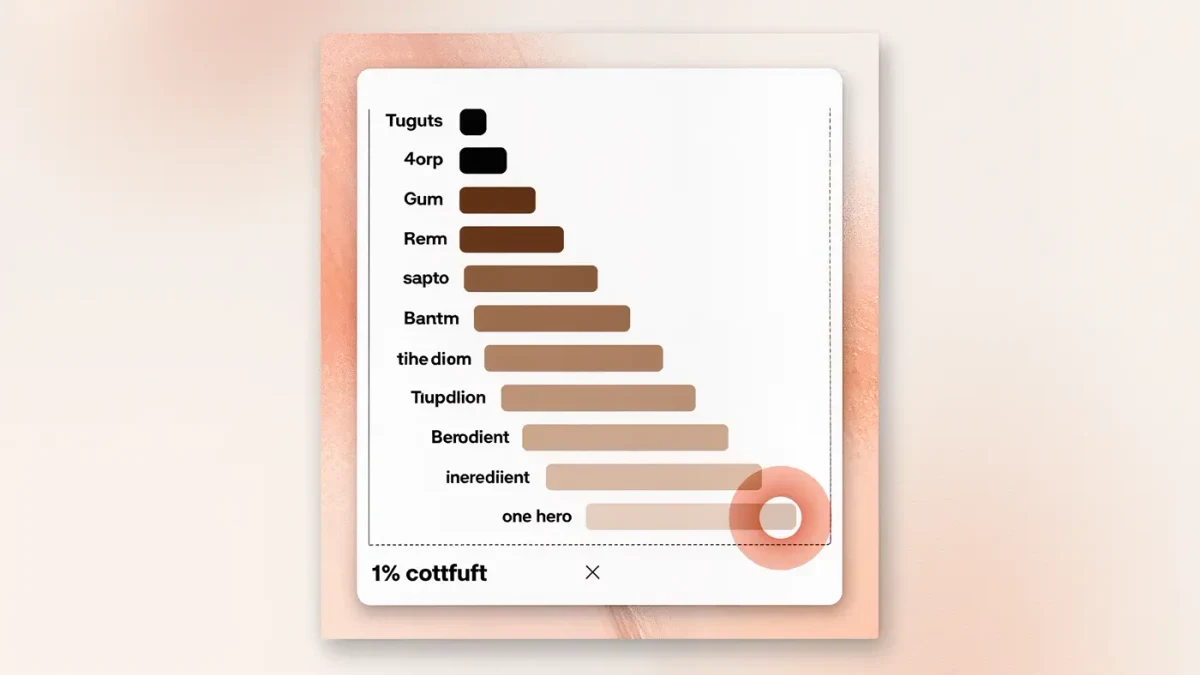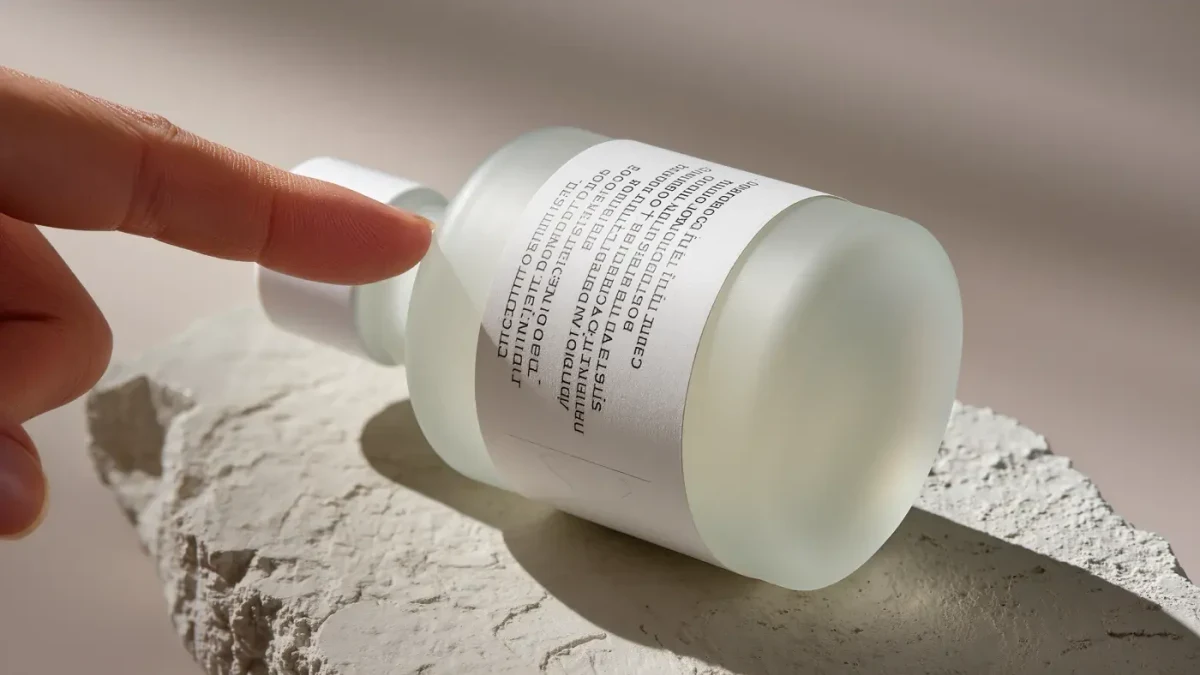
INCI — the International Nomenclature of Cosmetic Ingredients — is the standardized naming system on the back of every skincare bottle, and it follows two rules that unlock the whole list. Ingredients above 1% are listed in descending order of concentration; everything below 1% can appear in any order. That single regulatory fact tells you where the real formula lives: the top third of the list is the product, the bottom half is atmosphere. In the United States, the FDA requires ingredient declaration on cosmetic labels in this format, which is why the same Latin-ish vocabulary follows you from Paris to Tokyo.
Once you read that grammar, the front of the bottle stops mattering much. This guide covers how INCI ordering works, the tells that separate a hero ingredient from a garnish, and the marketing moves designed to confuse you.
What does the 1% line actually mean?
Regulators allow manufacturers to list every ingredient under 1% in whatever order they like — which is why preservatives like phenoxyethanol are so useful as reference points. Preservatives are legally required to keep products safe, and they almost always sit around or below the 1% mark. So everything listed before the first preservative is roughly above 1%, and everything after it is the long tail.
If a star ingredient — a peptide, a plant extract, a trendy vitamin — appears after the preservative, it is present at under 1%. Sometimes that is plenty; a 1% ceiling is meaningless for ingredients studied at 0.5%. But for actives like niacinamide or vitamin C, which have evidence at 2–10%, position is a genuine tell.
Which names hide in plain sight?
INCI sounds chemical, but it is a translation problem, not a chemistry problem:
- Tocopherol is vitamin E. Ascorbic acid is vitamin C.
- Butyrospermum parkii is shea butter. Cocos nucifera is coconut oil.
- Sodium hyaluronate is a salt form of hyaluronic acid — smaller, more easily formulated.
- Glycerin is exactly what it says: the workhorse humectant that tops more moisturizers than any fancy extract.
A Latin botanical name is not automatically an 'active.' The International Nomenclature Committee assigns names, not endorsements — a rose by INCI designation is still mostly a fragrance and a marketing paragraph.
How do you spot a marketing-first formula?
Three moves repeat across the aisle. One: the 'extract salad' — a dozen botanicals clustered at the bottom of the list so the box can claim them all, each presumably at fractions of a percent. Two: the 'hero at the finish line' — one celebrated ingredient printed after the preservative, sold as the reason to buy. Three: the fragrance-first squeeze, where parfum outranks every claimed active, telling you what the formula is actually optimizing for.
None of these make a product bad. They make the front label unreliable. The back is where the money is.
Does ingredient order tell you the exact percentages?
No — order is a bandsaw, not a scalpel. You get brackets, not numbers: that niacinamide is somewhere between 1% and the next listed ingredient, not a precise dose. Brands disclose exact percentages voluntarily when the number flatters them, a habit popularized by direct-to-consumer labels like The Ordinary in the mid-2010s. No disclosure plus a low position usually means the number is not the selling point.
What about 'free from' labels and alarm lists?
'Free from' marketing lists ingredients the formula lacks — a framing regulators in the UK and EU have scrutinized for implying that listed ingredients elsewhere are unsafe. The honest read: banned ingredients are banned; permitted ingredients are permitted at studied levels. Your skin's personal tolerances are the only blacklist that matters, and you find those by patch testing one new product at a time, not by memorizing alarm lists from a stranger's carousel post.
How to read a label in 60 seconds
Scan the first five ingredients for the formula's base and main event. Find the preservative and draw your mental 1% line. Locate the ingredient you are buying the product for and check which side it falls on. Check for fragrance position if your skin is reactive. Done — you now know more than the shelf talker wants you to.
Quick answers
Why are ingredients listed in Latin? INCI uses standardized Latin botanical names so a formula reads identically in every export market. A single global name prevents translation drift — your shea butter is butyrospermum parkii in Seoul and São Paulo alike. Common English names appear in parentheses on many modern labels.
Is a long ingredient list bad? Length is neutral. A short list of five ingredients can be elegant and ineffective; a twenty-ingredient list can be a stable, well-preserved formula doing several jobs. Judge the position of the ingredients you care about, not the total count.
Do the same rules apply everywhere? The descending-order-above-1% rule is shared across major markets including the US and EU, though enforcement details and permitted ingredients differ. An EU formula may contain ingredients the US regulator treats differently, so a label imported from another market is not automatically a clone of the domestic version.